
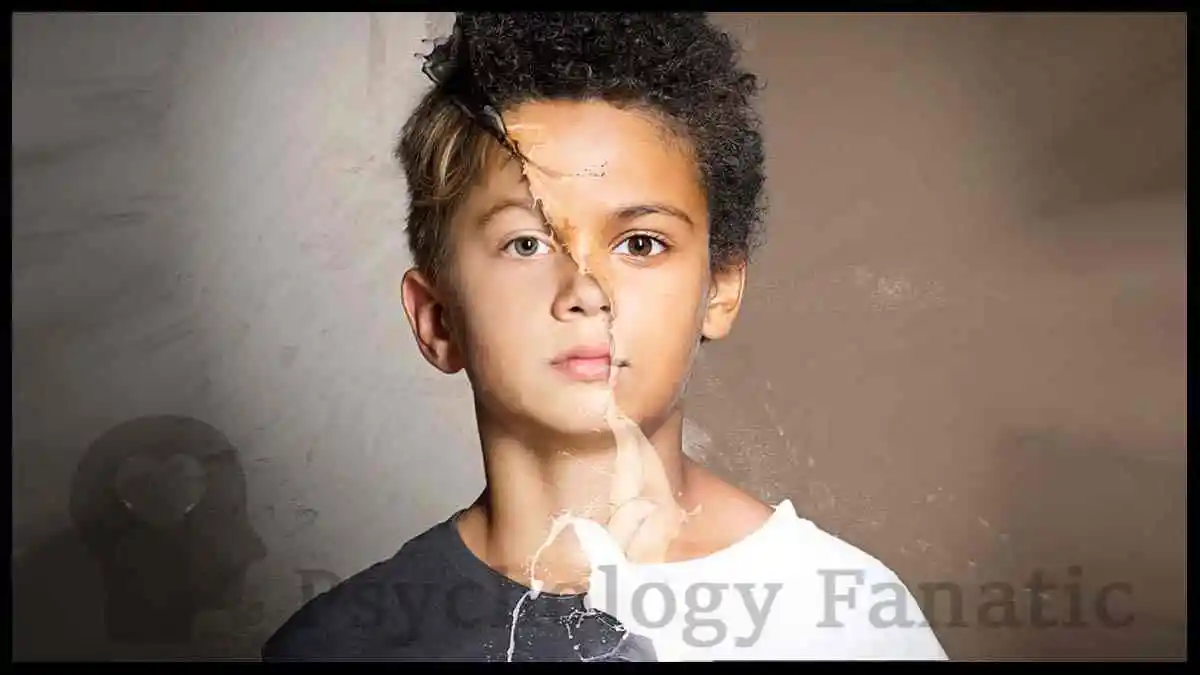
A hiring manager reads two equally qualified resumes and feels immediate confidence in one candidate. A teacher interprets the same restless behavior differently depending on the student. A clinician listens carefully, yet a familiar social category quietly changes which explanation feels most plausible. In each case, no one needs to announce a prejudice for group-linked associations to enter judgment.
Implicit bias describes this part of social cognition: learned associations can become active quickly, sometimes without deliberate intention or full awareness. The concept helps explain why sincere commitments to fairness do not automatically produce fair perception and behavior. It should not be used as a claim that every unequal outcome reveals a hidden motive, or that one test exposes a person’s moral character.
A responsible account therefore holds two ideas together. Automatic associations can influence consequential decisions, and the strength of that influence varies across people, situations, measures, and behaviors. The practical task is not to discover a perfectly unbiased mind. It is to build habits and decision environments that make relevant evidence easier to see and biased shortcuts harder to act upon.
Key Definition:
Implicit bias refers to automatically activated associations or evaluations involving social groups. These responses can differ from a person’s stated beliefs and values, and their influence depends on the situation, the measure, and the behavior being considered.
Table of Contents
Understanding Implicit Bias
What Implicit Bias Means
Implicit bias refers to automatically activated associations or evaluations involving social groups. Researchers study these responses with indirect tasks because people may be unable or unwilling to report them accurately. Implicit responses can differ from explicit beliefs, values, and intentions, although the two are not completely unrelated.
The word implicit requires care. It identifies a mode of measurement and a class of relatively automatic processes. It does not establish that a person has no awareness of the relevant thought or feeling. Gawronski notes that an indirect measure can operate without asking for a self-report, but this methodological fact does not prove that the underlying mental content is unconscious (Gawronski, 2019).
What Implicit Bias Does Not Mean
An implicit association is not the same thing as an explicitly endorsed prejudice. A stereotype is a generalized belief about a group. Discrimination is unequal treatment. Structural inequality refers to patterns embedded in policies, institutions, and access to resources. These phenomena can reinforce one another, but they are not interchangeable. Evidence for one does not automatically prove the others.
An implicit measure also does not reveal a hidden, permanent trait. Scores can vary with the task, the comparison categories, recent experiences, and the testing context. Gawronski’s review concludes that implicit measures are generally less stable over time than explicit measures and that no implicit measure offers a process-pure reading of bias (Gawronski, 2019). A score therefore requires cautious interpretation rather than a moral reading.
Automatic and Controlled Social Judgment
Patricia Devine’s foundational work distinguished knowledge of a cultural stereotype from personal endorsement of it. People can learn the associations available in their culture without accepting those associations as fair or true. In her studies, stereotype-linked material could be activated automatically, while people who rejected prejudice used attention and effort to inhibit stereotypic responses and replace them with responses that better reflected their values (Devine, 1989).
This distinction explains a familiar conflict. A person may sincerely endorse equality and still notice a stereotypic thought, feeling, or expectation. The first response is psychologically informative, but it is not the whole person. Reflection, motivation, and repeated practice can influence what happens next. Banaji and Greenwald describe this tension as a possible dissociation between reflective preferences and automatic associations (Banaji & Greenwald, 2016).
Automatic processing is useful. It allows us to recognize patterns, retrieve familiar meanings, and respond without rebuilding every judgment from the beginning. The problem arises when a group category supplies information that is irrelevant, inaccurate, or too general for the individual in front of us. A shortcut can feel fluent and still be wrong.
How Implicit Bias Develops
Implicit associations develop through repeated pairings in experience. Families, schools, neighborhoods, news, entertainment, institutions, and personal encounters all contribute to which groups become connected with danger, competence, warmth, status, dependence, or belonging. Some pairings reflect direct experience. Others are inherited from a culture long before a person has examined them (Banaji & Greenwald, 2016).
Categorization does not by itself equal hostility. Social categories help organize a complicated world, and group memberships can carry history, identity, and meaning. The danger grows when a category is treated as a deep essence that reveals what each member is like. Bastian and Haslam found that beliefs in fixed, discrete, biologically grounded, and highly informative human attributes were associated with stronger stereotype endorsement and more innate explanations of stereotypes (Bastian & Haslam, 2006). Their findings concern essentialist beliefs and explicit stereotyping, not an IAT score, but they help explain how a useful category can become an overconfident theory of a person.
How the Implicit Association Test Measures Bias
What the IAT Measures
The Implicit Association Test, or IAT, compares how quickly a person sorts categories when particular concepts share a response key. A race IAT, for example, may compare performance when Black and White faces are paired with positive and negative words. Faster responding in one pairing than another is interpreted as evidence that one set of associations is more readily accessible in that task (Banaji & Greenwald, 2016).
The IAT is useful in research because it does not depend entirely on what people say about themselves, and it can reveal patterns across large samples. It does not read thoughts directly. A result reflects the association being studied, but it can also be shaped by familiarity, attention, task order, recent experience, and ordinary measurement error. The safest interpretation is therefore modest: the score describes how readily certain categories were paired under particular testing conditions (Gawronski, 2019).
Why One Score Is Not a Verdict
A single IAT result should not be treated as a diagnosis of prejudice or a reliable ranking of one person’s character. Individual scores show limited stability, and researchers continue to debate what portion reflects enduring personal associations, temporary context, measurement error, and features of the task. The bias blind spot adds another complication: people often recognize bias more easily in others than in themselves, so confidence in personal objectivity is not a substitute for evidence (Pronin et al., 2004; Scopelliti et al., 2015).
The most defensible use of an implicit measure is modest. It can prompt inquiry, contribute to research, and reveal aggregate patterns. It cannot establish why a particular person made a particular decision. That judgment requires attention to the decision, the available evidence, comparable cases, the procedure used, and the outcome.
How Implicit Bias Relates to Behavior
When Automatic Associations Are More Likely to Matter
Implicit measures are related to intergroup behavior on average, but they do not predict every person or action. Across 217 research reports involving 36,071 participants, Kurdi and colleagues found that IAT results and self-reported beliefs each predicted a small part of behavior not captured by the other. The IAT’s unique statistical contribution was small (beta = .14), and the relationship varied greatly depending on measurement quality and how closely the test matched the behavior being studied (Kurdi et al., 2019).
That variation matters. Gawronski argues that there is no reason to expect a strong, unconditional relationship between an implicit measure and every possible behavior. Prediction improves when the measure, the target behavior, and their contexts correspond closely (Gawronski, 2019). In practice, automatic associations have more room to influence a decision when relevant criteria are vague, evidence is incomplete, discretion is broad, and no one examines whether comparable cases received comparable treatment.
When the Standard Moves
Bias can enter a decision before the final choice. It can influence what the evaluator decides counts as merit. Uhlmann and Cohen presented participants with male or female applicants whose credentials varied across strengths. Across three studies, participants could redefine the qualifications needed for gender-stereotyped jobs so that the preferred candidate’s particular credentials appeared especially important (Uhlmann & Cohen, 2005). Evaluators could therefore experience criteria as objective even when those criteria changed with the candidate.
Their third experiment tested a practical safeguard. When participants committed to hiring criteria before learning the applicant’s gender, the gender difference in hiring evaluations was eliminated in that experimental setting (Uhlmann & Cohen, 2005). This result does not prove that advance criteria remove every form of discrimination. It demonstrates why timing matters. A standard chosen before a case is seen is harder to tailor to the person one already wants to favor.
Individuals, Situations, and Systems
Small average effects can still matter when decisions are repeated. A slight difference in attention, evaluation, discipline, trust, or opportunity can accumulate across many encounters. At the same time, unequal outcomes can arise from explicit prejudice, policies, resource differences, network structures, historical exclusions, or other mechanisms. Implicit bias is one possible contributor, not a complete theory of inequality.
Context matters because automatic associations are not expressed in a vacuum. Payne and colleagues’ bias of crowds model suggests that an IAT score can reflect features of a person’s surroundings as well as the person. One individual’s score may shift from one occasion to another, while recurring cues and practices within a workplace, community, or institution can produce more stable group-level patterns (Payne et al., 2017). This is a theoretical model, not a final explanation, but it helps connect personal judgment with the environments in which judgment occurs.
Reducing Implicit Bias in Decisions
Implicit Bias Awareness Is Only a Beginning
Learning that implicit bias exists can create useful humility. It can also become performative if awareness is mistaken for change. Telling people that everyone is biased may reduce defensiveness, but it may also sound like an excuse or suggest that biased action is inevitable. Effective reflection connects awareness to a specific decision, a relevant stereotype, and a different response that can be practiced.
Devine and colleagues tested a multifaceted prejudice habit-breaking intervention that combined education, concern about discrimination, and strategies such as stereotype replacement, individuation, perspective taking, counterstereotypic examples, and increased opportunities for positive contact. Participants in the intervention showed reductions in implicit race bias across a twelve-week study, along with greater awareness and concern (Devine et al., 2012). The result is encouraging, but it came from one program and should not be generalized to every brief training.
What Research Shows About Implicit-Bias Training
A larger meta-analysis offers a sobering limit. Forscher and colleagues synthesized 492 studies with 87,418 participants. Experimental procedures changed implicit measures, usually by small amounts, but generally produced trivial changes in behavior. Changes in implicit measures did not reliably mediate changes in explicit measures or behavior (Forscher et al., 2019). A lower test score is therefore not enough to prove that people are being treated more fairly.
Greenwald and colleagues reached a related conclusion after reviewing individual treatments and group training programs. They found no established method that durably diminishes implicit bias and no reproducible evidence that these approaches reliably reduce discriminatory consequences. They therefore proposed a public-health approach centered on prevention and disparity finding (Greenwald et al., 2022). The aim is to interrupt routes from bias to unequal treatment and to examine where unequal outcomes actually occur.
This evidence shifts attention from symbolic completion to observable practice. One session may introduce language and motivation, but a program should be evaluated by what people do and what outcomes follow. A change in vocabulary, confidence, or test performance is not a substitute for evidence that treatment has become fairer.
Reducing Bias Through Structured Decisions
Bias is easiest to discuss in the abstract and hardest to notice inside a decision that already feels reasonable. A practical review begins by naming the judgment being made. What evidence is actually relevant? Which details would matter if the person’s group membership were different? Are comparable cases being treated by the same standard?
In hiring, admission, grading, discipline, lending, medicine, or performance review, structure can reduce the room available for an impression to quietly change the rules. Decision makers can define criteria before reviewing cases, use the same questions in the same order, separate observations from interpretations, and document departures from the usual standard. These practices do not guarantee fairness. They make inconsistency easier to detect and correct (Uhlmann & Cohen, 2005).
Organizations can also compare outcomes across groups, while remembering that a disparity is a question rather than automatic proof of discrimination. Greenwald and colleagues recommend examining whether a difference is large enough to warrant concern and whether plausible nondiscriminatory explanations account for it (Greenwald et al., 2022). When disparities persist, responsibility should not be left with the people who experienced them. The process that produced the pattern needs investigation.
Individual reflection still matters. When a strong reaction arrives quickly, pause long enough to identify the assumption it carries. Seek information about the person rather than filling gaps with the group. Consider a counterexample without using one exceptional person to dismiss a broader pattern. Invite feedback from people who can question the decision, especially when power differences make disagreement costly.
Perspective taking can help when it is grounded in listening and evidence. Imagining another person’s experience is less reliable when imagination simply projects our own beliefs onto them. Curiosity should lead to better questions, not confident claims about what another person must feel.
Responsibility Without Moral Panic
Implicit bias discussions often trigger a struggle over identity. If bias is equated with being a bad person, people have reason to deny it. If automaticity is treated as an excuse, the people affected by unequal treatment are asked to absorb the cost. Neither response improves judgment.
A more useful standard separates the arrival of an association from the responsibility for a decision. We do not choose every thought that becomes accessible. We are still responsible for building practices that keep an unexamined association from becoming someone else’s lost opportunity, humiliation, unsafe treatment, or exclusion.
Accountability also belongs to organizations. A fair-minded individual working inside an unexamined process may reproduce the process’s pattern. Reviewing criteria, discretion, appeals, data, and outcomes treats bias as both a personal and structural problem. It also avoids making moral self-assessment the only safeguard against unequal treatment.
A Few Words by Psychology Fanatic
We like to imagine that our values sit at the controls of every judgment. Often they do. Sometimes an older association arrives first, carrying the familiarity of culture and repetition. That moment need not define our character, but it should invite attention.
Fairness grows less from declaring ourselves free of bias than from becoming easier to correct. We can decide what matters before meeting the person we will judge, ask what evidence is missing, listen when a pattern is named, and examine outcomes that reveal a process is failing. The goal is not perfect inner purity. It is a more honest relationship with judgment and a more reliable commitment to how people are treated.
Associated Concepts
- Contact Hypothesis: Structured contact between groups can reduce prejudice under supportive conditions such as equal status, cooperation, common goals, and institutional support.
- Social Identity Theory: Group memberships contribute to self-concept and can shape in-group preference, out-group perception, and responses to threat.
- Complementary Stereotyping: Apparently positive traits can still confine people to unequal social roles and make a hierarchy appear balanced or fair.
- System Justification Theory: People may defend familiar social arrangements and use stereotypes to explain or legitimize unequal outcomes.
- Cognitive Dissonance: Conflict between egalitarian values and biased behavior can motivate reflection, correction, denial, or rationalization.
- Minimal Group Paradigm: Even arbitrary group boundaries can produce in-group preference, showing how little information may be needed for social categorization to affect allocation and judgment.
References
Banaji, Mahzarin R.; Greenwald, Anthony G. (2016). Blindspot: Hidden Biases of Good People. Bantam. ISBN: 9780345528438.
(Return to Main Text)
Bastian, Brock; Haslam, Nick (2006). Psychological essentialism and stereotype endorsement. Journal of Experimental Social Psychology, 42(2), 228–235. DOI: 10.1016/j.jesp.2005.03.003.
(Return to Main Text)
Devine, Patricia G. (1989). Stereotypes and prejudice: Their automatic and controlled components. Journal of Personality and Social Psychology, 56(1), 5–18. DOI: 10.1037/0022-3514.56.1.5.
(Return to Main Text)
Devine, Patricia G.; Forscher, Patrick S.; Austin, Anthony J.; Cox, William T. L. (2012). Long-term reduction in implicit race bias: A prejudice habit-breaking intervention. Journal of Experimental Social Psychology, 48(6), 1267–1278. DOI: 10.1016/j.jesp.2012.06.003.
(Return to Main Text)
Forscher, Patrick S.; Lai, Calvin K.; Axt, Jordan R.; Ebersole, Charles R.; Herman, Michelle; Devine, Patricia G.; Nosek, Brian A. (2019). A meta-analysis of procedures to change implicit measures. Journal of Personality and Social Psychology, 117(3), 522–559. DOI: 10.1037/pspa0000160.
(Return to Main Text)
Gawronski, Bertram (2019). Six lessons for a cogent science of implicit bias and its criticism. Perspectives on Psychological Science, 14(4), 574–595. DOI: 10.1177/1745691619826015.
(Return to Main Text)
Greenwald, Anthony G.; Dasgupta, Nilanjana; Dovidio, John F.; Kang, Jerry; Moss-Racusin, Corinne A.; Teachman, Bethany A. (2022). Implicit-bias remedies: Treating discriminatory bias as a public-health problem. Psychological Science in the Public Interest, 23(1), 7–40. DOI: 10.1177/15291006211070781.
(Return to Main Text)
Kurdi, Benedek; Seitchik, Allison E.; Axt, Jordan R.; Carroll, Timothy J.; Karapetyan, Arpi; Kaushik, Neela; Tomezsko, Diana; Greenwald, Anthony G.; Banaji, Mahzarin R. (2019). Relationship between the Implicit Association Test and intergroup behavior: A meta-analysis. American Psychologist, 74(5), 569–586. DOI: 10.1037/amp0000364.
(Return to Main Text)
Payne, B. Keith; Vuletich, Heidi A.; Lundberg, Kristjen B. (2017). The bias of crowds: How implicit bias bridges personal and systemic prejudice. Psychological Inquiry, 28(4), 233–248. DOI: 10.1080/1047840X.2017.1335568.
(Return to Main Text)
Pronin, Emily; Gilovich, Thomas; Ross, Lee (2004). Objectivity in the eye of the beholder: Divergent perceptions of bias in self versus others. Psychological Review, 111(3), 781–799. DOI: 10.1037/0033-295X.111.3.781.
(Return to Main Text)
Scopelliti, Irene; Morewedge, Carey K.; McCormick, Erin; Min, H. Lauren; LeBrecht, Sophie; Kassam, Karim S. (2015). Bias blind spot: Structure, measurement, and consequences. Management Science, 61(10), 2468–2486. DOI: 10.1287/mnsc.2014.2096.
(Return to Main Text)
Uhlmann, Eric Luis; Cohen, Geoffrey L. (2005). Constructed criteria: Redefining merit to justify discrimination. Psychological Science, 16(6), 474–480. DOI: 10.1111/j.0956-7976.2005.01559.x.
(Return to Main Text)
Last updated: October 4, 2026