
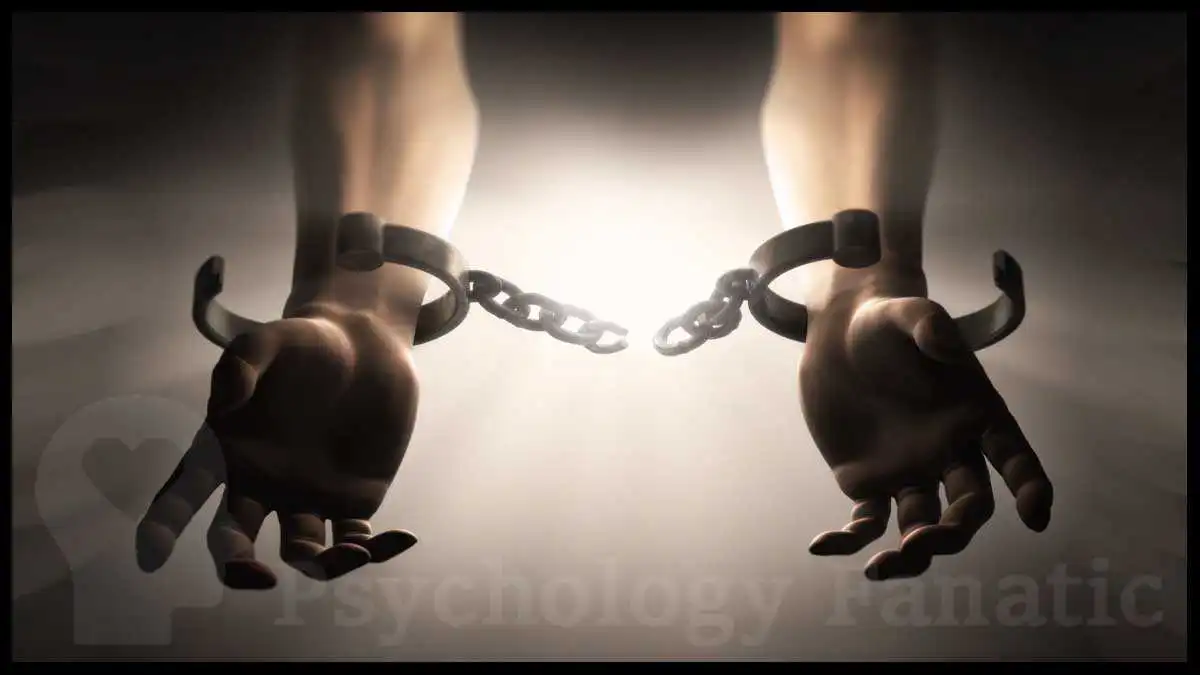
Human Stupidity and the Quest for Freedom
Freedom is neither conformity or rebellion. We do not experience Freedom through thoughtless reactions rather, we discover it through mindful choice. We express our freedom by carefully evaluating complex facts and then determining the best course of action. A mindful approach frees the chains of careless reactions and the painful consequences of human stupidity. Life trajectories do not condemn us to bad habits; we can escape the unhealthy patterns of our past.
Our society, social groups and relationships pressure for unquestioned conformity. Some social groups paradoxically expect followers to rebel against social norms but unquestionably accept the group’s own radical dogma. The current political climate provides daily examples of this. Political leaders condemn any followers questioning the groups direction as damaging. But we know better—blindness invites abuse of power.
Whether we automatically rebel or conform, we are blindly reacting, instead of using our powers of reason. Many substitute the powerful practice of mindful thought before a choice with waiting to use cognitive energy after the action to blame, excuse, and justify.
Key Definition:
Human stupidity in this article refers to our tendency to act irrational. We often act irrationally due to a combination of psychological, emotional, and cognitive factors. Our decision-making can be influenced by cognitive biases, emotions, social pressures, and situational circumstances, leading us to make choices that may not align with logical reasoning.
Politics and Unquestioning Allegiance
I am fascinated during the political campaign season how rarely commentators’ support shifts from one candidate to another; even with a constant flow of new information. It appears once publicly committed, the blinders prevent any further examining logic. And we vote a fool into office.
A recent event piqued my interest. The president condemned a senator as unpatriotic for questioning the success of a combat mission. The administration proclaimed it “un-American and disrespectful” to question an operation where a courageous soldier’s life was lost. Is a botched operation not possible? Could we have made mistakes that unnecessarily endangering lives of young soldiers? Blindly we accept a nonsensical remark, dismissing questions, and pledging our allegiance to the stupidity.
My memory fades but has not drifted into compete amnesia, forgetting two years of campaign rhetoric condemning every previous skirmish as complete disasters—many courageous soldiers died in each of these. We should not reward either political party with unquestioned authority to act, while condemning dissenters that enact their right to think as unpatriotic.
Phillip Zimbardo wrote:
“The point is that instead of distancing ourselves from the individuals who were deceived by assuming negative dispositional attributes in them—stupidity, naiveté—we need to understand why and how people like us were so completely seduced. Then we will be in a position to resist and to spread awareness of methods of resisting such hoaxes” (Zimbardo, 2007).
Emotions and Illogic
Human stupidity often is motivated by intense emotion. Our emotion interferes with other cognitive functions. A surge of emotion courses through our veins, delivery chemicals to muscles and organs, and we react with fevered behaviors. Often behaviors are appropriate and adaptive. Sometimes stupid and maladaptive.
Ayala Pines, clinical, social, and organizational psychologist, wrote:
“Falling in love is an intense emotional and physical experience that seems quite illogical because it is not our faculties of reason that dictate it. The electrical activity in the brain of a person in love is not in the cortex, the seat of logical thinking, but in the limbic system, the seat of powerful emotions” (Pines, 2005, p. 212).
Just as we fall in love, fight for romance, and other attachment activities, we act to fulfill other highly emotional activities without our “faculties of reason” to dictate our behavior. Our rational brain does not catch these errors. We act stupidly and it appears perfectly logical. Our brain relies on a number of functions for evaluating events. And many of these functions are littered with errors.
Robert DeMoss, a psychologist and clinical director, wrote:
“Although human beliefs and conclusions are often fervently embraced (and rarely questioned), thinking processes can result in errors or incorrect generalizations. Yet in spite of the brain’s potential for error, the brain has no built-in or automatic methods for checking its conclusions. Since much of the basis of our thinking is “learned,” we can learn that anything is accurate, if that is what we have been taught” (DeMoss, 1999).
And stupidity is born, quietly directing aspects of our lives in the shadows of the unconscious.
See Emotions and Logic for more on this topic
Self-Deception and Human Stupidity
Self-deception is closely associated with irrational behaviors as it involves deceiving oneself into believing something that is false or denying the truth. This can lead individuals to make decisions based on false premises, ultimately resulting in irrational behaviors. For example, someone may convince themselves that a harmful habit is not truly detrimental to their well-being, leading them to continue engaging in that behavior despite evidence to the contrary. In this way, self-deception can contribute to a pattern of irrational decision-making.
Often emotion is the drive of behavior. Instead of shifting gears, changing lanes, and correcting behavior to be in line with our values, we follow the trajectory of emotion and then justify our errant behavior.
See Self-Deception for more on this topic
A Few Words by Psychology Fanatic
Following the life we desire requires self-discipline. We must pause before acting, preventing unhealthy impulses from dictating our lives. Freedom is born during that pause. The health of our futures, the strength of our nation, the freedom to choose requires courageous thought not blind following.
We engage in purposeful effort after mindfully mulling through the thoughts and feelings. Our personal desires will occasionally conflict with the expectations of other people, groups, and governments. Maybe we are right—maybe not. Slow down to examine the difference, courageously speaking up when expedient to do so.
Some social norms are worthy of continuing while others are outdated and harmful; but social norms typically go unnoticed and unexamined. We must struggle to free ourselves from these chains. The norms may also be bad, containing dreadful biases, outdated approaches, and hateful reactions. Stop, think, and be free from this silliness.
Intentional thought, careful scrutiny of facts, openness to differing opinions frees us from harmful emotions, inviting flexibility and complexity into our character, freeing us from the stupidity of the past.
Associated Concepts
- Human Irrationality: This refers to the tendency of individuals to make decisions and take actions that deviate from logical reasoning or sound judgment. This phenomenon encompasses a wide range of behaviors, such as cognitive biases, emotional influences, and irrational beliefs.
- Cognitive Heuristics: These are mental shortcuts or rules of thumb that the human mind uses to simplify complex decision-making processes. These heuristics allow individuals to make quick judgments and decisions based on limited information and cognitive resources.
- Prospect Theory: This theory describes the way people make decisions under uncertainty. It suggests that individuals use a variety of quick evaluative heuristics rather than strictly logical calculations relying on the facts.
- Dunning-Kruger Effect: This is a cognitive bias where people with low ability overestimate themselves while those with high ability underestimate. This impacts decision-making and self-awareness in various areas. It cautions against overconfidence and the need for continual learning and self-doubt.
- Confirmation Bias: This bias refers to how individuals favor information that confirms their existing beliefs while disregarding contradictory evidence. This bias impacts decision-making, promotes social polarization, and reinforces stereotypes.
- Reactance Theory: This theory explains the psychological and behavioral response people often have when they perceive their freedom of action or choice is being threatened or eliminated. It posits that individuals have a fundamental need to maintain a sense of autonomy and control over their lives.
- Reconstructing Memories: This refers to the process by which memories are recalled, and sometimes altered, during retrieval. This phenomenon can be influenced by various factors, such as external suggestions, emotions, and the passage of time. It is a key concept in understanding the fallibility of human memory and its susceptibility to distortion.
References:
DeMoss, Robert T. (1999). Brain Waves Through Time. 12 Principles for Understanding the Evolution of the Human Brain and Man’s Behavior. Basic Books. ISBN: 9780306460104
(Return to Main Text)
Pines, Ayala Malach (2005). Falling in Love: Why We Choose the Lovers We Choose. Taylor & Frances; 2nd edition. ISBN: 9780415951876
(Return to Main Text)
Zimbardo, Philip (2007). The Lucifer Effect: Understanding How Good People Turn Evil. Random House. ISBN: 9781400064113.
(Return to Main Text)
Last Update: November 13, 2025