
Law of Contiguity: Learning Through Association and Proximity
The Law of Contiguity is a fundamental principle in psychology that helps us understand how associations are formed and how we learn. It states that when two stimuli or events occur together or in close succession, they become linked in our minds. In other words, things that are experienced together are more likely to be associated with each other.
This concept was first introduced by the British empiricist philosopher, David Hume, in the 18th century. Hume argued that only three principles created connection between ideas. He listed these as “resemblance, contiguity in time or place, and cause or effect” (Hume, 1993, p. 101).
Calvin Nodine proclaims that among the laws of learning, “the law of contiguity is one of the oldest, and perhaps most fundamental” (Nodine, 1969, p. 351). The value of contiguity rests on our limited resources for cognition. Our working memory cannot evaluate every new stimuli against the host of our entire life experience. We only draw upon the most salient knowledge. One of the most notable factors influencing saliency is recency. The law of contiguity is a fundamental reason for the availability bias.
Key Definition:
Contiguity, in the context of psychology, refers to the concept that two events or stimuli that are experienced close together in time and/or space become associated in the mind.
How Does the Law of Contiguity Work?
According to the Law of Contiguity, when two stimuli are repeatedly experienced together, they become associated in our minds. Michael Gazzaniga explains that Hume’s theory posits that through association, “the impression of one event brings with it the impression of the other, and if they continue to show up together, eventually the association becomes habitual” (Gazzaniga, 2018, p. 41).
This association can take different forms, such as:
- Classical Conditioning: This type of association occurs when a neutral stimulus becomes associated with a biologically significant stimulus. Ivan Pavlov’s classical conditioning experiments with dogs are a classic example. By repeatedly pairing a bell sound (neutral stimulus) with the presentation of food (biologically significant stimulus), Pavlov was able to condition the dogs to salivate at the mere sound of the bell. However, when the bell and the food were separated by greater time intervals no associations were made, and classical conditions failed to take place.
- Operant Conditioning: This form of association involves linking a behavior with its consequences. B.F. Skinner’s work on operant conditioning demonstrated that behaviors followed by positive outcomes are more likely to be reinforced, and therefore, repeated. The Law of Contiguity plays a crucial role in this process by connecting the behavior with the reinforcing consequence.
- Spatial Contiguity: This refers to the association between spatially close events or stimuli. When multiple elements are presented together in a spatially coherent manner, such as visuals and corresponding text, the Law of Contiguity enhances the learning and recall of the information.
Hume and Hebb
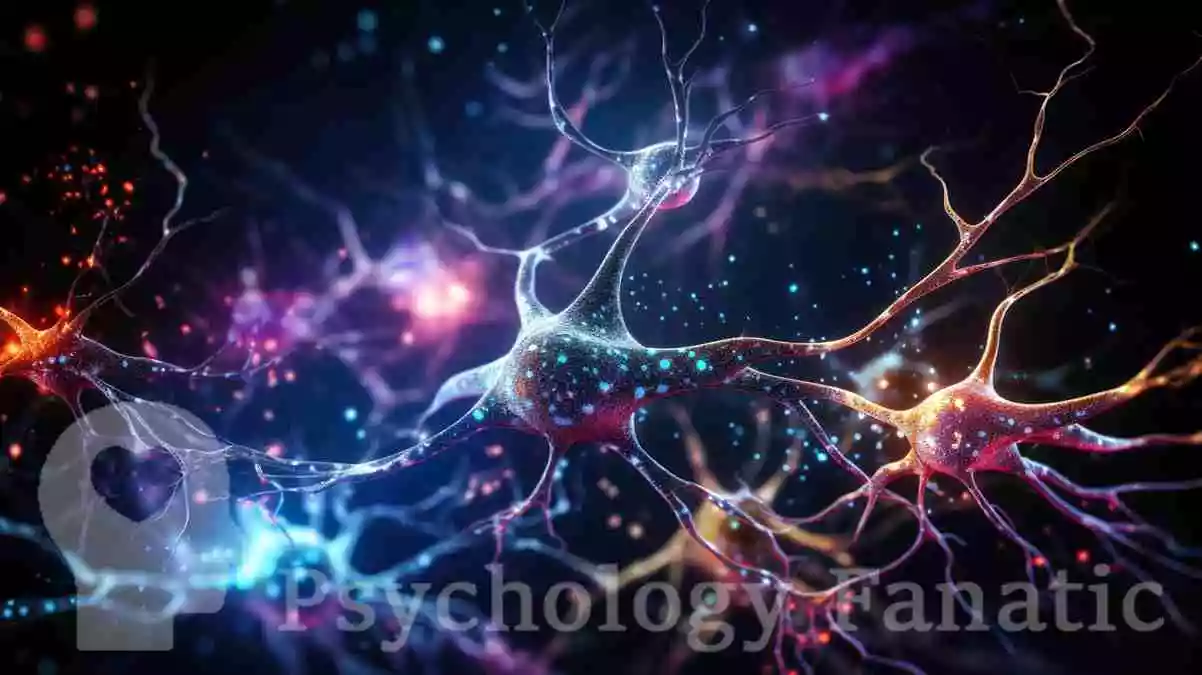
Hume explains, “the thinking on any object readily transports the mind to what is contiguous; but it is only the actual presence of an object, that transports it with a superior vivacity” (Hume, 1993, p. 127). Donald Hebb wrote that an essential condition of learning is that “two central events occur together” (Hebb, 1949, p. 147). We know Hebbian theory for his famous concept, “cells that fire together, wire together.”
Practical Applications
Understanding the Law of Contiguity has various practical applications in fields like education, advertising, and psychology. Here are a few examples:
- Education: Teachers can leverage the Law of Contiguity by presenting related concepts together and providing appropriate examples. Connecting new information with previous knowledge helps students form associations, facilitating learning and retention.
- Advertising: Advertisers use the Law of Contiguity to associate their products with positive emotions or desirable outcomes. By pairing their brand with compelling visuals or memorable jingles, they aim to create positive associations in consumers’ minds.
- Language Learning: When learning a new language, practicing words and phrases in relevant contexts helps establish associations between the vocabulary and its meaning. Using flashcards, interactive media, and immersive experiences can enhance the effectiveness of language learning.
- Memory Improvement: To enhance memory retrieval, the Law of Contiguity suggests that organizing information in a meaningful and coherent way can improve recall. Chunking related pieces of information together and creating mental connections aid in memory consolidation and retrieval.
Following this law, I find that when encountering the wide range of human behavior, I often view it from the framework of whichever psychological topics I am researching at the time. This great for understanding the topic of research but not always helpful in understanding a behavior through the most applicable theories.
Associated Concepts
- Startle Response: This is a natural physiological reaction to a sudden or threatening stimulus. It is characterized by a rapid, involuntary reflex that can include a combination of physical reactions such as jumping, jolting, or a quickened heart rate. This instinctual response is believed to have evolved as a protective mechanism to help individuals react swiftly to potential dangers.
- Primal Panic: This refers to an innate emotional response to extreme dangers in our environment that threaten basic biological needs.
- Sympathetic Nervous System: This is a branch of the autonomic nervous system responsible for the body’s “fight or flight” response. When activated, it increases heart rate, dilates the pupils, and redirects blood flow to the muscles. This system prepares the body for intense physical activity in response to stress or danger.
- Habituation: This refers to the diminishing of a physiological or emotional response to a frequently repeated stimulus. In simpler terms, it is the process through which an organism gradually becomes accustomed to a particular stimulus, leading to a decreased reaction over time.
- Neural Plasticity: Habituation reflects the brain’s ability to adapt to repeated stimuli by altering neural pathways and reducing neurotransmitter release at synapses involved in the response.
- Selective Attention: Habituation allows individuals to focus on novel stimuli by diminishing the attention paid to familiar, non-threatening stimuli.
A Few Words by Psychology Fanatic
The law of contiguity provides a fundamental explanation for how we learn and form associations in our daily lives. From the way we connect words to the music we enjoy, this principle shapes our experiences and memories. While seemingly simple, the law of contiguity lays the foundation for more complex learning processes.
However, it’s important to remember that learning is not solely based on proximity. Factors like meaning, repetition, and emotional salience also play a crucial role. Understanding the law of contiguity allows us to leverage its power in our own learning journeys. By consciously creating associations and utilizing spaced repetition techniques, we can enhance our ability to learn and retain information.
Ultimately, the law of contiguity highlights the dynamic nature of our minds. We are constantly building connections, drawing from past experiences to shape our present and future. By understanding this basic principle, we can become more active participants in our own learning and personal growth.
Last Update: February 19, 2026
References:
Gazzaniga, Michael S. (2018). The Consciousness Instinct: Unraveling the Mystery of How the Brain Makes the Mind. Farrar, Straus and Giroux. ISBN-10: 0374715505
(Return to Main Text)
Hebb, Donald (1949/2012). Organization of Behavior: A Neuropsychological Theory. Psychology Press. ISBN: 9780415654531; APA Record: 1950-02200-000
(Return to Main Text)
Hume, David (1751/1983). An Enquiry Concerning the Principles of Morals. Hackett Publishing; Copyright 1983 edition. ISBN-10: 0915145464
(Return to Main Text)
Nodine, Calvin (1969). Temporal variables in paired-associate learning: The law of contiguity revisited. Psychological Review, 76(4), 351-362. DOI: 10.1037/h0027457
(Return to Main Text)
Related Articles

Prepulse Inhibition

Affective Neuroscience

Embodied Cognition
