
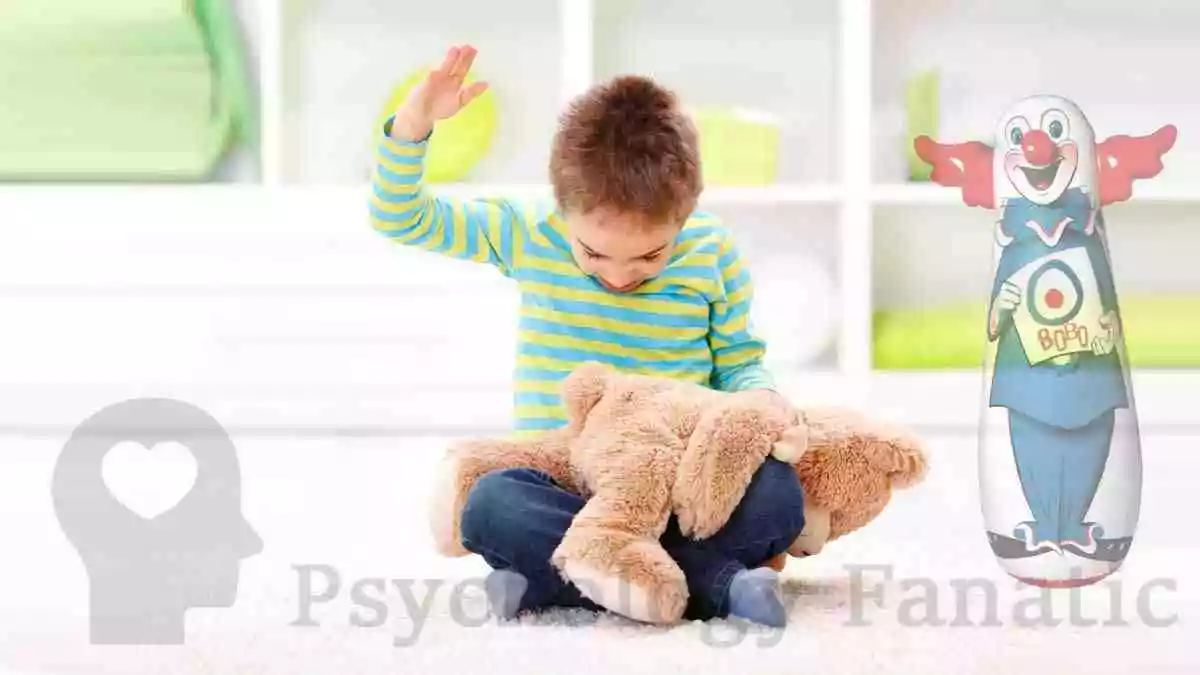
Unraveling Aggression: The Bobo Doll Studies
In the early 1960s, psychologist Albert Bandura conducted a groundbreaking series of experiments that would forever alter our perception of how aggression is learned. These studies, collectively known as the Bobo doll experiments, revealed that children can acquire aggressive behaviors through observation and imitation. But what exactly did Bandura discover, and how does it shape our understanding of social learning? Let’s delve into the fascinating world of the Bobo doll studies and explore their implications for human behavior.
The Bobo doll experiments demonstrated that children are not passive recipients of their environment; rather, they actively absorb social cues and behaviors from those around them. By observing adults interacting with an inflatable doll named Bobo, children learned to mimic aggressive actions. These findings have far-reaching implications, shedding light on media influence, interpersonal violence, and the role of modeling in shaping our behavior.
The Bobo Doll Experiment
Albert Bandura (1925-2021), internationally recognized as one of the most influential psychologists, was one of the pioneers of social learning theory. In a 1961, Bandura published one of his more famous studies, involving children observing adult aggression on an inflatable doll named Bobo (Ozer, 2022).
In Bandura’s experiments, a child would be playing in a room when an adult would enter the room and become aggressive with a blow-up Bobo doll. Later, when the child was left alone, he or she would generally imitate the aggressive behavior of the adult, aggressively attacking the doll (Graham & Arshad-Ayaz, 2016). Bandura believed that once children learn that aggressive behavior is appropriate, and can also be rewarding, they are more likely to act aggressively during conflict (Drewes, 2008).
Observational Learning
Bandura’s findings sought more complex answers than simple observational learning. By the time of Bandura’s Bobo doll experiments social learning had been well established. Bandura was digging a little deeper into the nuts and bolts of observational learning. While Bandura’s findings challenged “established behavioral doctrine that human behavior was the result of conditioning through direct positive and negative reinforcement and trial and error” (Ozer, 2022). Basically, Bandura wanted to show the impact of positive and negative reinforcements through observational learning.
In another Bobo doll experiment published in 1965, Bandura showed preschoolers a video of an adult expressing aggression on a Bobo doll and using distinct words along with his aggression, such as, “Pow! Right in the nose. Boom! Boom!” In this experiment, “Children observed a film-mediated model who exhibited novel physical and verbal aggressive responses.” Bandura then added consequences, “In one treatment condition the model was severely punished; in a second, the model was generously rewarded; while the third condition presented no response consequences to the model” (Bandura, 1965, p. 590).
As predicted, children that observed the model rewarded for aggression were far more likely to imitate the aggression than children who observed the model punished. However, children that observed no response consequence also reproduced the behavior at a high rate. Children reproduced the words associated with the aggression at a far diminished rate compared to the behaviors. Bandura explains that “The rate, amount, and complexity of stimuli presented to the observer may partly determine the degree of imitative learning” (p. 593).
Complex Stimuli and Subjective Conclusions
However, learning from complex stimuli requires interpretations, a higher order function. Bandura explains, “responses of higher order complexity are produced by combinations of previously learned components which may, in themselves, represent relatively complicated behavioral patterns.” Bandura continues, “a person who possess a very narrow repertoire of behavior, for example, will, in all probability, display only fragmentary imitation of a model’s behavior” (Bandura, 1965, p. 594).
Perhaps, this partly explains why the preschoolers, with weaker verbal skills, were less likely to reproduce the language accompanying the aggression. Despite the ambiguity of meaning from the complexity, I find the conclusions intriguing.
Bobo Doll Experiment Implications
The Bobo doll studies imply violence is transmitted through observation. Children in abusive households may learn unintended lessons about the appropriateness of aggression, carrying on violent tendencies into adulthood. Others cite the Bobo doll experiment findings in concerns over the impact of violent media. Albert Bandura theorized that, “Virtually all learning resulting from direct experience can also occur on a vicarious basis by observing the behavior of others and its consequences.” He continues, “The capacity to learn by observation enables organisms to acquire large, integrated patterns of behavior without having to form them gradually by tedious trial and error” (Bandura, 1978).
Roy Baumeister and John Tierney commented on strict parenting, explaining that, “Researchers have found that severity seems to matter remarkably little and can even be counterproductive: Instead of encouraging virtue, harsh punishments teach the child that life is cruel and that aggression is appropriate” (Baumeister & Tierney, 2012).
Research empirically supports social learning, suggesting it plays a significant role in child social development.
Associated Concepts
- Social Learning Theory (SLT): Proposed by psychologist Albert Bandura, SLT emphasizes that people learn new behaviors by observing and imitating others. It serves as a bridge between traditional behaviorism and cognitive approaches. Unlike Skinner, Bandura believed that humans actively process information and consider the relationship between their behavior and its consequences.
- Modeling: A central component of SLT, is modeling. It involves learning through observation and copying the behavior of someone.
- Frustration-Aggression Hypothesis: This Hypothesis posits that frustration often leads to aggressive behavior. When individuals are blocked from achieving a goal or fulfilling a need, it can generate a state of frustration, which in turn increases the likelihood of aggressive responses.
- Social-Cognitive Theory: This theory formulated by Albert Bandura emphasizes learning through observation, imitation, and modeling within social contexts. Key concepts include observational learning, self-efficacy, and reciprocal determinism.
- Group Relations Theory: This theory explores how individuals interact in groups, influenced by psychoanalytic principles. It examines roles, behaviors, and the impact of group dynamics on both personal and collective outcomes.
- The Asch Conformity Study: This research conducted by psychologist Solomon Asch in the 1950s aimed to understand the extent to which social pressure from a majority group could influence a person to conform.
A Few Words by Psychology Fanatic
In conclusion, no single theory sufficiently explains childhood development, particularly when it comes to the influence of violence in a child’s environment. It is crucial to recognize that witnessing domestic violence does not inevitably condemn a child to repeat those patterns in adulthood. Many children who grow up in violent homes find ways to break free from these cycles and develop healthy relationships later in life. The resilience exhibited by these individuals underscores the complexity of human behavior and emphasizes that circumstances are not deterministic; rather, they interact with various personal and social factors that shape one’s trajectory.
Moreover, while it’s undeniable that exposure to violence—whether through real-life experiences or media such as video games and television—can have an impact on development, this influence is just one piece of a larger puzzle. The vast majority of children who engage with violent content do so without adverse effects; they grow into well-adjusted adults capable of empathy and understanding. Factors such as parenting styles, community support systems, education, and individual personality traits all play significant roles in determining how children process their experiences. Ultimately, acknowledging the multifaceted nature of childhood development allows for a more nuanced understanding of aggression and resilience within our society.
Last Update: January 16, 2026
References:
Bandura, Albert (1978). Social Learning Theory of Aggression. Journal of Communication, 28(3), 12-29. DOI: 10.1111/j.1460-2466.1978.tb01621.x
(Return to Main Text)
Bandura, Albert (1965). Influence of models’ reinforcement contingencies on the acquisition of imitative responses. Journal of Personality and Social Psychology, 1(6), 589-595. DOI: 10.1037/h0022070
(Return to Main Text)
Baumeister, Roy F., Tierney, John (2012). Willpower: Rediscovering the Greatest Human Strength. Penguin Books; Reprint edition.ISBN: 9780143122234; APA Record: 2011-16843-000
(Return to Main Text)
Drewes, A. (2008). Bobo Revisited: What the Research Says. International Journal of Play Therapy, 17(1), 52-65. DOI: 10.1037/1555-6824.17.1.52
(Return to Main Text)
Graham, P., & Arshad-Ayaz, A. (2016). Learned Unsustainability: Bandura’s Bobo Doll Revisited. Journal of Education for Sustainable Development, 10(2), 262-273. DOI: 10.1177/0973408216650954
(Return to Main Text)
Ozer, Elizabeth M. (2022). Albert Bandura (1925–2021). American Psychologist, 77(3), 483-484. DOI: 10.1037/amp0000981
(Return to Main Text)