
Bounded Rationality: Redefining Decision Making
Imagine a mythical hero who knows the solutions to every mathematical problem, instantly performs infinitely complex computations, and possesses a crystal-clear vision of the future. For decades, traditional economics built its foundation on this fictional character, often called “Economic Man”—a perfectly rational being who is assumed to exhaustively calculate the absolute best possible choice in every scenario. In reality, however, human beings are wildly different. We do not possess the infinite time, limitless mental energy, or complete information required to make mathematically perfect decisions. If we actually tried to evaluate every possible alternative and consequence before acting, we would be completely paralyzed by computational overload.
Enter the concept of “bounded rationality,” a paradigm-shifting theory pioneered by Nobel laureate Herbert A. Simon that permanently changed how we view human decision-making. Instead of portraying our cognitive limitations as tragic flaws, bounded rationality reveals how our minds use fast, frugal, and surprisingly smart mental shortcuts—known as heuristics—to successfully navigate an overwhelmingly complex world.
Rather than functioning like omniscient supercomputers, we operate more like “backwoods mechanics,” relying on practical rules of thumb to find solutions that are simply “good enough” for our immediate circumstances. By understanding that our reasoning is strictly limited by our environment, we can stop striving for impossible perfection. We also realize it is constrained by our own biology. This understanding helps us comprehend how real people make everyday choices.
Key Definition:
Bounded rationality is a concept proposed by Herbert Simon suggesting that human decision-making is limited by available information, cognitive capacity, and time. Instead of seeking the absolute optimal solution, humans ‘satisfice’—choosing the first option that meets their minimum criteria.”
Table of Contents
Introduction: Herbert Simon and Bounded Rationality
Herbert A. Simon was a visionary polymath who was awarded the 1978 Nobel Prize in economic sciences for his groundbreaking research into how decisions are actually made within organizations. By integrating insights from psychology, artificial intelligence, and operations research, Simon fundamentally challenged the deeply entrenched classical economic theories of his time (1; 2).
The Paradigm Shift
Traditional economic theory was built entirely on the concept of “Economic Man”—a perfectly rational being who is assumed to know everything about their environment, possess an impressively clear set of preferences, and use flawless computational skills to calculate the absolute best possible choice (3).
Simon pointed out that this idealized model was an unrealistic fantasy, as human beings simply do not have the facts, the consistent structure of values, or the limitless reasoning power required to make mathematically perfect decisions (4).
Instead, he pushed for a drastic revision toward a more realistic model of the “Administrative Man,” a decision-maker with limited knowledge and ability who navigates a complex world by doing the best he can with the resources he has (5).
Because of our cognitive limits, Simon posits that humans generally do not “optimize” (find the absolute best option); rather, we “satisfice,” meaning we search just long enough to select a course of action that is “good enough” for our practical circumstances (6; 7).
However, it is important to note that the point of “good enough” is subjective. We vary. Some jump to quick conclusions while others mut mull over the options a bit longer. Some even get lost in the options and never courageously begin the frightening task of taking action.
The Scissors Metaphor
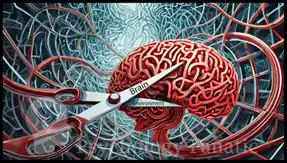
To explain how we manage to make sound, successful choices despite these mental limitations, Simon coined the concept of “bounded rationality” and illustrated it using his famous metaphor of a pair of scissors (8). He argued that human rational behavior is shaped by two distinct blades. One blade represents the cognitive limitations of the human mind. The other blade represents the structure of the outside environment.
You cannot understand how a pair of scissors cuts by looking at just one blade; similarly, Simon showed that our limited minds are able to thrive because we use simple mental shortcuts (heuristics) that perfectly fit and exploit the structures of the environments we live in.
Key Concept: Satisficing vs. Maximizing
Satisficing
The term “satisficing,” famously coined by Herbert Simon, is a practical blend of the words “satisfy” and “suffice” (9). It describes a realistic approach to decision-making where you search through your options just long enough to find an alternative that reaches or surpasses your “aspiration level” (10). Instead of holding out for absolute perfection, you choose the first course of action that is successful and good enough to meet your needs.
Herbert Simon formally defined the difference between an “optimal” and a “satisfactory” alternative. He explains that an alternative is optimal only if you can compare it against all other possible choices and prove it is the absolute best. An alternative is satisfactory (satisficing) if it simply meets or exceeds a predetermined set of minimum criteria—this is what Simon called the “aspiration level” (11). In this realistic model of decision-making, a person searches through alternatives sequentially and chooses the very first option that meets this aspiration level (12).
See Maximizers and Sufficers In Decision Making or more on this topic
The Analogy
Think of your brain like a flashlight in a giant Lego bin. A Maximizer tries to turn on all the overhead lights in the room, unpack the entire bin, and exhaustively examine every single piece to find the one perfect gold brick. This represents the classical ideal of optimization, which assumes you have the time and ability to gather all available information before acting. A Satisficer, on the other hand, relies on the flashlight. Because they can only see what’s right in front of them, they use a simple “stopping rule”. They scan the small circle of light, pick the best brick they can find within that limited view, and get right back to building (13).
March and Simon actually used a very similar, famous metaphor of their own to explain this exact concept. They wrote that the difference between maximizing and satisficing is like:
“The difference between searching a haystack to find the sharpest needle in it and searching the haystack to find a needle sharp enough to sew with” (14).
The “Simple Stopping Rule”
Because a satisficer isn’t trying to weigh every possible factor, they employ a fast and frugal “stopping rule”—they terminate their search the exact moment they find an option that meets their aspiration level (15). This approach dispenses with the need for endless cost-benefit calculations and preserves mental energy.
Dynamic Aspiration Levels (Flexibility)
Another key feature of satisficing that reduces stress is that a person’s “aspiration level” is flexible and dynamically adjusts to reality. If a satisficer is having a hard time finding a good option, their aspiration level naturally drops to match what is available; if great options are everywhere, their aspiration level rises (16; 17).
Aspiration levels are not permanently fixed but are rather dynamically adjusted to the situation. They are raised if it is easy to find satisfactory alternatives, and lowered if satisfactory alternatives are hard to acquire.
~Gerd Gigerenzer and Reinhard Selten (2001, p. 14)
The Cost of Perfection
While maximizing sounds like a foolproof way to ensure you always get the best outcome, Maximizers often end up much more stressed and less happy than Satisficers (18).
Barry Schwartz explains that whereas “maximizers might do better objectively than satisficers, they tend to do worse subjectively” (19). The idea here is that seeking more options and further analyzing and comparing the different options typically will arrive at a better decision. However, the sufficer (satisficer) will experience more contentment over their decision (less post choice second guessing).
See Perfectionism for more on this concept
The Cost of Maximizing
To truly maximize, a person must generate an exhaustive list of all possible alternatives and meticulously compare every option against every other option across a full set of dimensions. In the real world, this demands a disproportionate amount of time and mental effort. Simon argued that doing this requires brain processes that are “several orders of magnitude more complex than those required to satisfice” (20). Attempting to weigh all these factors can plunge a Maximizer into “computational overload” or a state of complete decision paralysis.
Furthermore, Maximizers often fall victim to Fredkin’s paradox—spending enormous, agonizing amounts of energy trying to choose between options that have only microscopic differences in actual value. Satisficers bypass this trap entirely, preserving their mental resources for enjoying the results of their choices (21).
“The paradox is that as the different options become closer and closer together in value, the effort needed to select the best one will increase, but the benefit of selecting the best one will decrease.
~Gerd Gigerenzer and Reinhard Selten (2001, p. 111-2)
The Three Boundaries (Why We Can’t Be “Perfect”)
Bounded rationality rests on three primary constraints:
Boundary 1: Cognitive Limitations (The Brain’s Finite Budget)
The first major boundary of bounded rationality is the sheer computational limit of the human brain. While traditional economics assumes we possess infinite reasoning power, Herbert Simon recognized that we simply do not have the mental capacity or the computational skills to calculate every possible consequence of our choices (22; 23).
Our conscious, deliberate reasoning relies on a strictly limited “budget of attention” and draws from a shared, finite pool of mental energy (24). When we attempt to process too much information, we suffer from “cognitive load” or “ego depletion“—a state where our mental energy and blood glucose levels are literally drained, leaving us vulnerable to superficial judgments and loss of self-control (25; 26).
Because this rigorous, analytical thinking is so biologically expensive and exhausting, our brains naturally resist it; we are forced to rely on fast, intuitive shortcuts (heuristics) and satisficing simply because we lack the cognitive stamina to continuously maximize our decisions (27).
Too much concern about how well one is doing in a task sometimes disrupts performance by loading short-term memory with pointless anxious thoughts.
~Daniel Kahneman (2011).
Boundary 2: Incomplete Information (The Reality of the Unknown)
The second major boundary to perfect rationality is that we simply never have all the facts. Traditional economic models assume that an idealized decision-maker possesses an “impressively clear and voluminous” knowledge of their environment, along with a complete understanding of all possible alternatives and their exact consequences (28). In reality, our knowledge is almost always limited, and we are forced to make choices based on an incomplete picture of the world (29).
Gathering every missing piece of data is not just difficult; it is fundamentally constrained by the environment because searching for more information costs valuable time, money, and energy. Consequently, instead of paralyzing themselves trying to achieve omniscience, boundedly rational decision-makers rely on “fast and frugal” heuristics—simple rules of thumb that require only a few key pieces of information to make a successful choice (30). In fact, sometimes a systematic lack of knowledge can actually be an advantage; for example, the “recognition heuristic” allows humans to make surprisingly accurate inferences simply by trusting what is familiar and ignoring what is unknown (31).
Boundary 3: Time Constraints (The Ticking Clock)
The third major boundary of bounded rationality is the unavoidable pressure of limited time (32). Traditional economic models often assume we have the luxury of an infinite timeline to survey every possible alternative, calculate probabilities, and painstakingly weigh the expected utilities of each choice (33). In the real world, however, this exhaustive search cannot go on indefinitely; it is strictly constrained by deadlines, dwindling attention, and the simple passage of time.
As researchers point out, “time is money, or at least energy,” and lingering too long on a decision can mean missing a fleeting opportunity or losing an advantage to a faster competitor. Because true optimization is practically impossible when decision time is scarce, our brains have adapted to rely on “fast and frugal” heuristics that drastically cut down the amount of information we process (34).
In countless high-pressure scenarios—from a driver deciding in a split-second whether to exit a busy highway to a physician triaging patients in an emergency room—making a quick choice is just as critical as making the best choice. Consequently, having a simple stopping rule that allows us to act the moment we find a “good enough” option is not a cognitive flaw, but a highly intelligent adaptation for surviving in a fast-paced world (35).

Applications of Bounded Rationality
Bounded rationality has far-reaching implications across diverse domains:
1. Behavioral Economics
Traditional economic models assume individuals maximize utility, but Herbert Simon’s concept of bounded rationality reveals that we often deviate from this mathematically perfect ideal. For instance, consumers might choose a familiar brand over a cheaper alternative simply because of cognitive shortcuts (36; 37).
Building directly on Simon’s foundational limits, pioneers like Daniel Kahneman, Amos Tversky, and Richard Thaler established the field of behavioral economics to map exactly how these cognitive boundaries shape our daily choices (38).
Because our computational power and access to perfect information are restricted, we do not behave like flawlessly rational “Econs”; instead, we rely on fast, intuitive rules-of-thumb (heuristics) that lead to systematic, predictable errors (39; 40). For example, behavioral economics demonstrates that our decisions are heavily influenced by how a problem is described rather than just the objective facts (framing effects)(41; Kahneman & Tversky, 2000, p. 9), we irrationally value money differently depending on the arbitrary categories we assign it to (mental accounting) (42), and we feel the pain of a financial loss much more intensely than the pleasure of an equivalent gain (loss aversion).
By embracing bounded rationality as a reality, behavioral economics throws out the impossible blueprint of the “Economic Man” and provides a much more accurate, empirically grounded picture of how psychological, emotional, and social factors actually drive human markets (43).
2. Organizational Decision-Making
In the realm of organizational decision making, the concept of bounded rationality explains why institutions must structure themselves to overcome the cognitive limitations of their individual members. Because no single executive or department possesses the infinite time or mental capacity required to process the overwhelming complexity of the business environment, organizations survive by deliberately simplifying reality (44; 45).
They achieve this primarily through problem decomposition—breaking down massive, complex goals into smaller, nearly independent subproblems that specific departments or teams can realistically manage. Furthermore, rather than constantly evaluating all possible alternatives for every daily challenge, organizations develop “performance programs” or standard operating procedures that provide fast, pre-packaged responses to routine situations.
By relying on these structured routines and setting standards to “satisfice” (finding a good-enough solution) rather than exhaustively searching for the absolute optimal outcome, organizations build a stable structure that allows them to act cohesively and efficiently despite the inevitable cognitive limits of their workforce.
3. General and Specific Personal Application of Bounded Rationality
Understanding and implementing practices in bounded rationality can greatly enhance our lives. Bounded rationality pairs well with specific goals, such as starting a fitness program, or general practices such as our relationship with risk. Bounded rationality helps maintain a functional balance between preparation, planning, and action.
Example of a Specific Goal
Applying the principles of bounded rationality to starting a fitness program allows an individual to bypass the stress and decision paralysis associated with trying to find the absolute “optimal” workout or diet (46). Instead of acting like a maximizer who must weigh all possible alternatives, a person can employ “satisficing”—searching only until they find a routine or local gym that is “good enough” to meet their basic aspiration level, thereby getting started quickly and preserving mental energy (47).
Problem Decomposition
To further overcome cognitive limitations, the individual can use problem decomposition to break the massive, complex goal of “fitness” into manageable, independent daily subgoals.
Gigerenzer & Selten explain:
“Problem decomposition refers to the observation that in boundedly rational problem solving, the problem is frequently broken up into small subproblems that are solved one by one” (Gigerenzer & Selten, 2001, p. 94).
The most difficult part is getting started. It behooves us to quickly establish simple “performance programs” so that exercising becomes a structured, automatic routine rather than a daily choice requiring fresh calculation. The planning, researching, comparing can become a form of procrastination. We can research forever, feel like we’re accomplishing something, and never practically move any closer to fulfilling our goal.
Finally, because bounded rationality recognizes human limitations in self-control, individuals can utilize precommitment strategies—such as paying for an annual health club membership in advance—which cleverly leverages the “sunk cost effect” as a positive inducement to actually show up, rather than facing the recurring mental conflict of a per-visit fee.
We’ve seen that as the number of options under consideration goes up and the attractive features associated with the rejected alternatives accumulate, the satisfaction derived from the chosen alternative will go down. This is one reason, and a very important one, why adding options can be detrimental to our well-being.
~Barry Schwartz (2005)
General Personal Applications
I bring up general application because, like other behaviors, bounded rationality may become habitual. For instance, lets look at a very general life desire such as wellness. We examined in previous sections that positive subjective impact of choosing “good enough” over the best. However, it impacts wellness in a much more general way. Wellness is a broad and complex concept. The internet loves to entice readers with magical tricks that if implemented will dramatically change their lives.
The problem is these (sometimes) well-meaning tidbits of information for improving wellness are countless. We can investigate millions of them. Try a new one each minute of our lives and never exhaust the ever growing list. The massive flow of data stalls practical implication of the basics of wellness that actually have the most probability of improving our lives.
Whether we seek to avoid dangers or implement practical action into our lives, a bounded rational approach provides are most likely avenue to success.
4. Policy Design
Governments and policymakers incorporate bounded rationality into the design of interventions, such as “nudges” (48). These interventions guide individuals toward better choices without restricting their freedom of choice.
5. Artificial Intelligence (AI) and Machine Learning
Bounded rationality informs AI algorithms that mimic human decision-making. Simplified decision rules allow machines to make efficient choices within computational limits (49).
Critiques of Bounded Rationality
While bounded rationality offers a more realistic view of human decision-making, it has faced several notable critiques across different disciplines. Traditional economists often resist the concept, criticizing the psychological approach for merely generating a scattered list of cognitive errors and biases without providing a singular, coherent, and mathematically elegant alternative to the standard rational-agent model (50; 51).
Additionally, the term “bounded rationality” is frequently misused to describe “optimization under constraints,” which ironically leads some critics to dismiss it as just a hidden, more complicated, and less psychologically plausible form of optimization (52).
From the perspective of evolutionary biology, the concept is sometimes seen as unappealing because the “full rationality” it attempts to bound is viewed as an absurd “straw man” that belongs in a science fiction novel (53). Instead of defining animal and human behavior merely as a bounded or flawed version of an impossible economic ideal, these biologists argue that organisms possess a sophisticated, evolved “natural wisdom” tailored to their specific environments.
Finally, even within its own ranks, specific models of bounded rationality—such as aspiration adaptation theory—are critiqued for being incomplete, as they often leave crucial early steps like initial goal formation and the construction of alternatives completely unmodeled (54).
Associated Concepts
- Bottleneck Theories: These refer to the concept that cognitive processing is limited in capacity and that certain stages of information processing can only handle a limited amount of information at a time.
- Expected Utility Theory: This theory suggests that people make rational choices by weighing the potential satisfaction they might gain from different outcomes against the likelihood of those outcomes occurring.
- Rational Choice Theory: This is a framework that suggests individuals make decisions by weighing the costs and benefits of different options. It assumes that people are rational actors who seek to maximize their self-interest.
- Mental Contrasting: This is a psychological strategy that involves contrasting a desired future with the current reality. This technique aims to help individuals identify and understand the obstacles or potential pitfalls that may hinder the achievement of their goals.
- Dual-Process Theories: These theories, such as Daniel Kahneman’s model, distinguish between two types of thinking: fast, automatic, intuitive (System 1) and slower, more deliberate, and logical (System 2). Heuristics are typically associated with System 1.
- Selective Information Processing: This is an information selective process, largely unconscious, that shapes, trims, and screens new information to conform with preexisting beliefs. Selective information processing is an adaptive response to dynamic and complex environment.
- Attentional Control Theory (ACT): This theory explores the influence of anxiety on attention, highlighting the delicate balance between goal-directed and stimulus-driven attentional systems. Research supports that anxiety increases cognitive load, impacting attentional control and cognitive performance.
A Few Words by Psychology Fanatic
In exploring the intricacies of bounded rationality, we gain a deeper appreciation for the often imperfect yet profoundly human nature of decision-making. Herbert Simon’s groundbreaking insights remind us that our choices are shaped not just by cold calculations but also by cognitive limits and contextual factors. Whether we’re selecting a product in the supermarket or navigating complex life decisions, understanding that we “satisfice” rather than optimize allows us to embrace our imperfections and recognize the role of intuition in our daily lives.
As we’ve seen throughout this article, bounded rationality provides a valuable framework for interpreting behaviors across various domains—from economics to organizational structures. Recognizing these inherent limitations equips us with tools to make better decisions without falling into the trap of striving for unattainable perfection. So next time you find yourself faced with a tough choice, remember that it’s perfectly okay to seek out satisfactory solutions instead of getting bogged down by endless possibilities—after all, sometimes good enough truly is just what you need!
Last Edited:
References:
Ariely, Dan (2013). The Honest Truth About Dishonesty: How We Lie to Everyone–Especially Ourselves. Harper Perennial; Illustrated edition. ISBN 10: 0062183613
(Return to Main Text)
Ariely, Dan (2010). Predictably Irrational, Revised and Expanded Edition: The Hidden Forces That Shape Our Decisions. Harper Perennial; Revised and Expanded ed. edition. ISBN 10: 0061353248
Banaji, Mahzarin R.; Greenwald, Anthony G. (2016). Blindspot: Hidden Biases of Good People. Bantam; Reprint edition. ISBN-10: 0345528433
(Return to Main Text)
Gigerenzer, G. (2015). On the Supposed Evidence for Libertarian Paternalism. Review of Philosophy and Psychology, 6(3), 361-383. DOI: 10.1007/s13164-015-0248-1
(Return to Main Text)
Gigerenzer, G.; Selten, R. (2001). Bounded rationality: The adaptive toolbox. MIT Press. ISBN: 9780262072144
(Return to Main Text)
Gigerenzer, G., & Goldstein, D. G. (1996). Reasoning the fast and frugal way: Models of bounded rationality. Psychological Review, 103(4), 650–669. DOI: 10.1037/0033-295X.103.4.650
(Return to Main Text)
Hausman, D. M.; Welch, B. (2010). Debate: To Nudge or Not to Nudge. Journal of Political Philosophy, 18(1), 123-136. DOI: 10.1111/j.1467-9760.2009.00351.x
(Return to Main Text)
Kahneman, Daniel (2013). Thinking Fast; Thinking Slow. Farrar, Straus and Giroux; 1st edition. ISBN-10: 0374533555
(Return to Main Text)
Kahneman, Daniel (2003). Maps of bounded rationality: Psychology for behavioral economics. The American Economic Review, 93(5), 1449–1475.
(Return to Main Text)
Kahneman, Daniel; Lovallo, Dan (2000). Timid Choices and Bold Forecasts A Cognitive Perspective on Risk Taking. Kahneman, D., & Tversky, A. (Eds.), Choices, Values, and Frames. Cambridge University Press. ISBN: 9780521627498
(Return to Main Text)
Lopes, L. L. (1991). The rhetoric of irrationality. Theory & Psychology, 1(1), 65-82. DOI: 10.1177/0959354391011005
(Return to Main Text)
March, J. G.; Simon, H. A. (1958). Organizations. Wiley. ISBN: 9780631168560
(Return to Main Text)
Murphy, T. Franklin (2025). Behavioral Economics: The Psychology of Choice. Psychology Fanatic. Published: 7-23-2025; Accessed: 3-5-2026. Website: https://psychologyfanatic.com/behavioral-economics/
Rahwan, I., Cebrian, M., Obradovich, N. et al. (2019). Machine behaviour. Nature 568, 477–486 (2019). DOI: 10.1038/s41586-019-1138-y
(Return to Main Text)
Schwartz, Barry (2005). The Paradox of Choice: Why More Is Less. Ecco; Revised ed. edition. ISBN: 9780060005696
(Return to Main Text)
Simon, H. A. (1955). A behavioral model of rational choice. The Quarterly Journal of Economics, 69(1), 99-118. DOI: 10.2307/1884852
(Return to Main Text)
Simon, H. A. (1956). Rational choice and the structure of the environment. Psychological Review, 63(2), 129–138. DOI: 10.1037/h0042769
(Return to Main Text)
Simon, H. A. (1990). Invariants of human behavior. Annual Review of Psychology, 41, 1–20. DOI: 10.1146/annurev.ps.41.020190.000245
(Return to Main Text)
Thaler, R. H. (1980). Toward a positive theory of consumer choice. Journal of Economic Behavior and Organization, 1(1), 39-60. DOI: 10.1016/0167-2681(80)90051-7
(Return to Main Text)
Thaler, Richard H.; Sunstein, Cass R. (2009). Nudge: Improving Decisions about Health, Wealth and Happiness. Yale University Press; Revised & Expanded edition. ISBN: 9780300262285
(Return to Main Text)
Thaler, Richard H. (1999). Mental accounting matters. Journal Behavioral Decision Making, 12: 183-206. DOI: 10.1002/(SICI)1099-0771(199909)12:3<183::AID-BDM318>3.0.CO;2-F
Tversky, Amos; Kahneman, Daniel (2000). Rational Choice and the Framing of Decisions. Kahneman, D., & Tversky, A. (Eds.). (2000). Choices, Values, and Frames. Cambridge University Press. ISBN: 9780521627498