
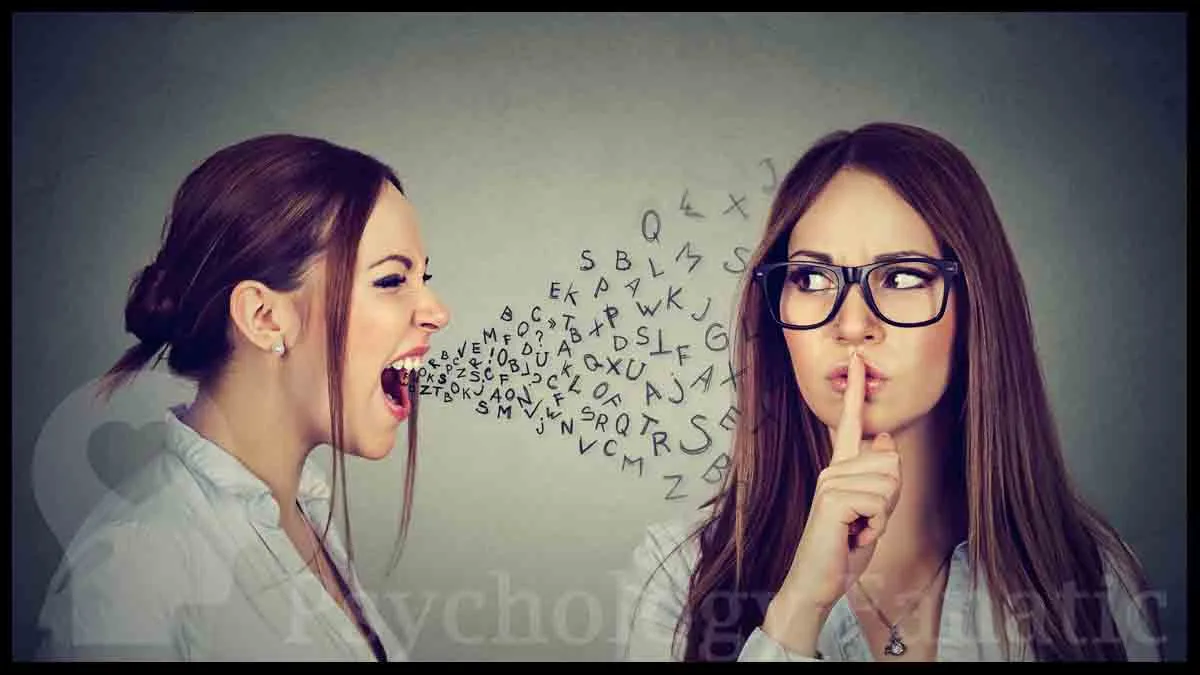
Unleash Your Power: Overcoming Self-Censure and Embracing Authentic Expression
Self-censorship, also known as self-censure, is a phenomenon that occurs when individuals purposefully choose to limit or restrain their own expression, thoughts, or actions. It often arises out of fear or apprehension of potential consequences, such as social backlash, legal repercussions, or professional harm. While self-censorship can be seen as a means of self-preservation or complying with societal norms, it is a complex and intricate concept that warrants deeper examination.
Self censure operates under the theory of internal opposing drives for action. One part of us desires to act in one way, while another part of the self desires something different. Eventually, one desire overpowers the other, and we behave accordingly. In self censorship, the term typically is referring to the conscious, rational mind, censoring automatic or instinctual impulses to say or do something that society (or logic) deems inappropriate.
Key Definition:
Self censuring refers to the suppression of impulses to speak or behave in socially inappropriate ways. It may also refer to refraining from saying or doing things that interfere with long term goals.
Self-censorship does not have an exact definition in psychology. Consequently, when we find the term ‘self-censoring’ within psychological literature the onus is on us to determine the author’s meaning by examining the surrounding context. Most literature uses self-censoring as a conscious action of suppression of an impulsive desire to say or do something. However, I found in many texts authors referring to self-censoring as an unconscious repression.
Ervin Staub defines it this way: “Self-censorship may be an intentional decision, a barely conscious bias, or an unconscious screening of reality. This cognitive screening can involve ‘dissociation,’ the keeping out of consciousness aspects of life or reality that do not fit cultural self-conception and values” (Staub, 1992, p. 273).
Internal Conflict
Our psych and motivations are not unified. The underlying challenges in life create a compelling argument can be made for Leon Festinger’s cognitive dissonance theory. Life pulls us in many different ways. We desire opposing things. We desire to be universally accepted while expressing ourselves in uninhibited ways. These opposing desires naturally conflict. Sigmund Freud explains this primary conflict and the consequences of the conflict in much of his writing.
In Beyond the Pleasure Principle, Freud explains, “any given process originates in an unpleasant state of tension and thereupon determines for itself such a path that its ultimate issue coincides with a relaxation of this tension” (Freud, 1920). Basically, our desires to act in a certain way create a tension; by carrying out behaviors that satisfy the desire we relieve the tension. In his book, Civilizations and Its Discontents, Freud outlines the basic conflict between society and the individual. He wrote that, “civilization is built up upon a renunciation of instinct, how much it presupposes precisely the non-satisfaction of powerful instincts” (Freud, 1930).
Basically, acceptance in society requires a certain amount of suppression of internal drives to act in socially unacceptable ways. This applies to rules set by culture and family. However, it also includes the underlying expectation in more personal relationships. Learning to balance internal drives with desired drives for belonging requires some self censorship.
Repressions vs. Suppression
In general, self-censorship refers to suppression, an intentional act to refrain from acting on an impulse. Murphy wrote, “repression is similar to its cousin suppression. The major difference is that repression occurs unconsciously while suppression is a conscious act” (Murphy, 2021).
We may self censor an impulse to tell uncle Johnny exactly howe feel about him in order to preserve the general good feelings of the evening. Not every impulse should be expressed. We must use wisdom, acknowledge larger goals, and occasionally self censure. In Freudian terms, this will leave us with an unfulfilled desire, creating tension. However, expressing an impulse may relieve the tension of the original desire but create a new tension by interfering with our desire for acceptance.
A Continuum of Self Censorship
Like most behaviors, we can exercise self censorship in helpful and harmful ways. We can fail to censor all self-serving behaviors and words, or we can over censor self expression. Each end of the continuum creates problems that interfere with our overall wellbeing. On one end of the continuum we find extreme selfishness and lack of empathy; on the other end, we find high social anxiety and loss of autonomy.
Through a mindful examination of our self censoring, we can discover unhealthy patterns and work to bring our self censoring habits more towards the middle of the continuum.
The Psychological Dimensions of Self-Censorship
Fear of Rejection or Criticism
One of the main drivers of self-censorship is the fear of negative reactions or consequences from others. People may choose to withhold their true opinions or ideas to avoid being shunned, ridiculed, or ostracized. This fear of rejection can stem from various sources, including a desire for social acceptance or a concern for personal safety. In many instances, we may be accurately assessing the situation and the potential for harm.
Perhaps, when being robbed by a nervous man pointing a gun, we should censor the words that express what we really think about him.
On the other hand, many of our fears are not reasonable. Accordingly, we withhold self-expression in many instances where our opinion and thoughts will be openly received. In these cases, our self censorship limit resources of support. Being rejected hurts. However, expressing our innermost desires, emotions, and feelings and being accepted is a valuable experience, fostering confidence, trust, and a feeling of safety. In order for others to attune and validate, we must be willing to openly express our inner experience.
Fear of Expressing Emotion
Emotions frighten many of us. They intense arousals push us from our controlled states into a wild frenzy. Hence, many of us learn early in life to censor expressions of emotions. We may repress emotions to the extent we even detach from feeling them ourselves. We can trace much of our tendency to repress and suppress emotions back to our childhood experiences. Susan David, a psychologist on the Harvard Medical School faculty, wrote, “a child who feels free to experience the full range of emotions without fear of punishment, or the need for self-censorship, learns some key lessons: Emotions pass. They are transient. There is nothing in mental experience that demands an action” (David, 2016).
Self censorship of emotions may limit opportunities for connection.
See Rejection Sensitive Dysphoria for more on this topic
Conformity and Groupthink
Groupthink also promotes self-censoring, where individuals prioritize harmony within a group over expressing dissenting opinions. In order to maintain group cohesion or avoid conflict, individuals may suppress their true beliefs, leading to a suppression of diverse perspectives within communities or organizations. We see too much self-censoring in politics. Too many politicians censure personal feelings and beliefs to walk inline with a party agenda.
The proliferation of groupthink in our sacred buildings of democracy defiles the very concept. Voters adopt similar stances and intelligent expression of individuality is sacrificed, and the people blindly accept the party’s polarized agendas.
See Groupthink for more on this topic
Perceived Authority and Control
Authority figures or institutions can exert significant influence over individuals, fostering a culture of self-censorship. When individuals feel that others will scrutinize their actions or words or even fear that those in power will be punish them, they may suppress their thoughts or emotions to comply with perceived expectations or standards.
In some countries, self censorship is necessary to avoid a cold prison cell.
Negative Implications of Self-Censorship
Stifling Creativity and Innovation
Self-censorship can hinder the development of groundbreaking ideas and innovative solutions. When individuals withhold their unique perspectives or unconventional thoughts, the censured ideas limits the potential for creative breakthroughs. Embracing open communication and fostering diverse viewpoints is crucial for progress.
Diminished Freedom of Expression
A society where self-censorship dominates can have serious implications for freedom of expression. Demands for uniform agreement creates an environment that stifles truthful and critical discussions, causing a lack of transparency, creativity, and engagement. A healthy democracy relies on the open exchange of ideas and viewpoints.
Mental and Emotional Burden
Continuously self-censoring can take a toll on an individual’s mental and emotional well-being. Suppressing authentic thoughts and emotions can lead to increased stress, anxiety, and a sense of disconnection from one’s true self. Encouraging an environment that promotes freedom of expression is essential for personal growth and positive mental health.
Navigating Self-Censorship
Understanding the delicate balance between self-censorship and open expression is crucial in navigating social and professional environments. Here are some strategies to consider:
Recognize Your Motivations
Reflect on your reasons for self-censorship. Are you choosing to withhold your thoughts out of fear, conformity, or external pressures? Understanding your motivations can help you evaluate whether self-censorship is necessary or limiting your potential.
See Deep Reflection for more on this topic
Create Safe Spaces
Foster environments that promote open dialogue, respect, and inclusivity. We should encourage environments where everyone’s voices are heard, even if they differ from the majority opinion. Creating safe spaces allows individuals to express themselves authentically without fear of judgment or backlash.
Unfortunately, the open agenda of social platforms create hostile environments for openness. A simple remark may attract many venomous rebuttals. Many people hate open expression. They, of course, cry when social standards prevent their own impulsive expressions. Yet, they feel entitled to create malicious and intimidating environments to prevent others the same rights.
See Emotional Safety for more on this topic
Embrace Critical Thinking
Develop critical thinking skills to evaluate the implications of self-censorship. Consider the long-term consequences of suppressing your thoughts and explore alternative ways to express your ideas. Engage in thoughtful conversations that challenge existing narratives constructively.
See Rational Thought and Critical Thinking for more information on this topic
Support Freedom of Expression
Advocate for and participate in initiatives that promote freedom of expression, such as engaging in open discussions, supporting journalism, and defending the rights of marginalized voices. Fostering an environment that values diverse perspectives contributes to a more inclusive and dynamic society.
Associated Concepts
- Personal Constructs: These are subjective beliefs used to interpret the world. Developed by George Kelly, they influence emotions, memories, and future evaluations.
- Self-Monitoring Theory: This theory explains how individuals regulate their behavior based on social cues and personal context. This concept involves self-observation, emotional control, and adaptive behavior to different social situations.
- Emotional Labor: This refers to the effort, energy, and work required to manage and regulate one’s emotions in accordance with the demands of a particular situation. This concept is often used in the context of the workplace.
- Belongingness: This refers to an emotional need for acceptance and connection, profoundly influences our lives. Evolutionary roots explain our biological drive for social bonds, and unmet belonging needs can lead to physical and emotional distress.
- Emotional Dissonance: This involves conflict between genuine and expected emotions, leading to stress and psychological strain. This discrepancy can impact job performance and overall well-being.
- Authenticity: This refers to the genuine expression of one’s thoughts, feelings, and behaviors in alignment with one’s true self. It involves the ability to act in a way that is consistent with one’s own values, beliefs, and experiences, rather than conforming to external expectations or pressures.
A Few Words by Psychology Fanatic
Self-censorship is a multifaceted phenomenon with psychological, societal, and personal implications. While there are many valid reasons for self-censorship, it is crucial to strike a balance that also allows for authentic expression and encourages open dialogue. By understanding its impact and actively working towards a culture of freedom of expression, we can create environments that foster growth, innovation, and understanding.
Last Update: July 16, 2025
References:
David, Susan (2016). Emotional Agility: Get Unstuck, Embrace Change, and Thrive in Work and Life. Avery; First Edition.
(Return to Main Text)
Freud, Sigmund (1920/1990). Beyond the Pleasure Principle. W. W. Norton & Company; The Standard edition.
(Return to Main Text)
Freud, Sigmund (1930). Civilization and Its Discontents. GENERAL PRESS; 1st edition.
(Return to Main Text)
Murphy, T. Franklin (2021) Defense Mechanisms. Psychology Fanatic. Published: 2-4-2021; Accessed: 11-22-2023.
(Return to Main Text)
Staub, Ervin (1992). The Roots of Evil: The Origins of Genocide and Other Group Violence. Cambridge University Press; Revised edition.
(Return to Main Text)