
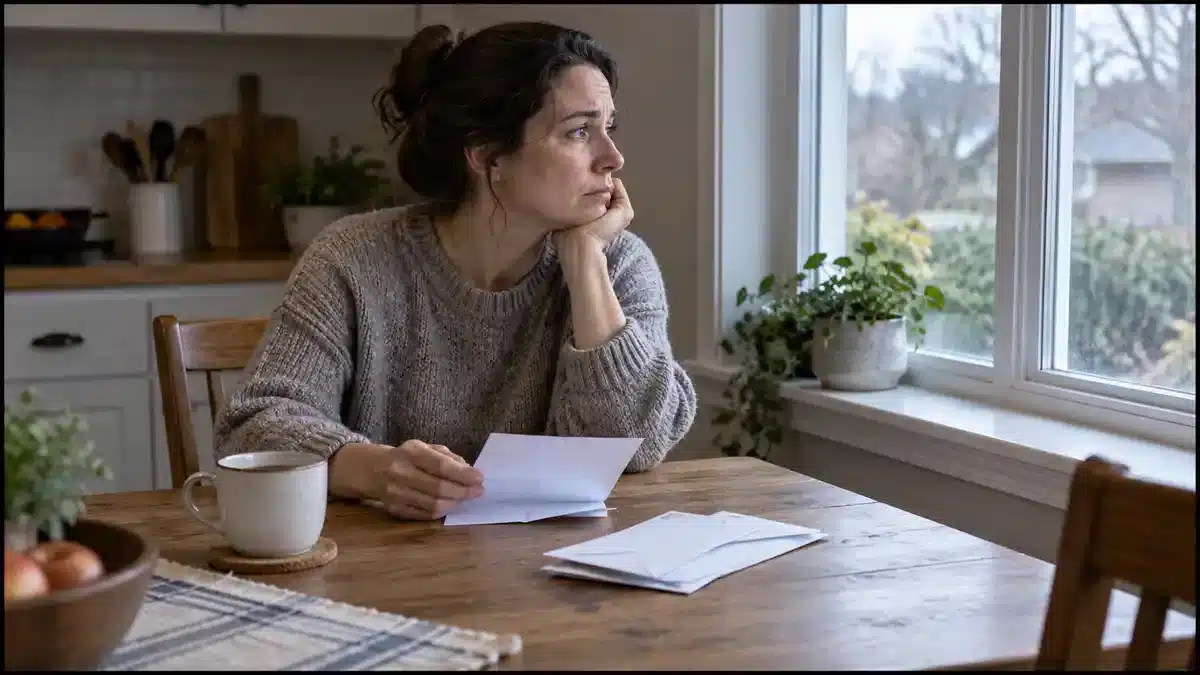
You can do many things carefully and still receive news that changes your life. A job disappears, an accident interrupts an ordinary afternoon, or someone you trusted causes harm. Alongside the immediate pain comes a bewildering question: how could this happen when I was trying so hard to do things right?
The question contains an understandable hope that effort and decency will provide some protection. Often our actions do improve our chances. But chances are not guarantees, and suffering is an unreliable measure of worth. People can also make mistakes without deserving disproportionate harm. When we overlook that distinction, an unwanted event can begin to feel like a judgment about who we are.
Psychology helps explain why unfair suffering can be so difficult to comprehend. Just-world beliefs, expectations about merit, and assumptions about safety shape how we understand both our own losses and those of other people. Examining these beliefs creates room for a response that acknowledges the harm, considers its causes, and asks what support is possible now.
Key Definition:
Undeserved suffering means experiencing pain or hardship that is not justified by a person’s moral worth. Harm can have identifiable causes without being deserved, fully preventable, or within the affected person’s control.
Table of Contents
- Just-World Beliefs and the Expectation of Fairness
- When Adversity Shatters Our Assumptions
- How the Search for Fairness Becomes Victim Blaming
- Complex Systems and the Limits of Personal Control
- Coping When Life Is Unfair
- Social Support That Does Not Put Suffering on Trial
- Resilience Without Another Test of Worth
- A Helpful Narrative Can Leave Some Questions Unanswered
- A Few Words from Psychology Fanatic
- Associated Concepts
- References
Just-World Beliefs and the Expectation of Fairness
Most of us want effort to count and wrongdoing to have consequences. Just-world theory examines a further psychological investment: the need to believe that people generally receive outcomes they deserve. In this account, an orderly relationship between conduct and consequences makes it easier to invest in the future. Undeserved suffering can threaten that relationship (Hafer & Bègue, 2005).
Wanting a fairer world can motivate us to change what happens. Assuming that the world already distributes suffering fairly can instead lead us to reinterpret another person’s pain until it seems deserved. The difference becomes visible in what we ask: whether someone has earned their hardship, or what could reduce it.
Meritocracy and the Promise of Earned Outcomes
Meritocracy brings this concern into the language of achievement. As an ideal, it calls for opportunities and rewards to reflect relevant ability and effort rather than inherited privilege. As a description of how society already works, it can imply that success chiefly reflects individual merit. Hadden and colleagues argue that simple causal intuitions help explain the appeal of this belief, while obscuring the influence of circumstances beyond the individual (Hadden et al., 2025).
There is a large difference between saying that effort matters and saying that effort explains the result. A capable worker can lose a job when an organization closes. People with similar dedication can face very different opportunities, obligations, and reserves of money. If we judge the person entirely through the outcome, those conditions disappear from view (Hadden et al., 2025).
Meritocratic beliefs and just-world beliefs overlap, but they are not identical. One concerns how achievement and rewards are explained; the other concerns a wider expectation of deservingness and justice. Together they can make hardship appear to reveal insufficient effort or poor character. Recognizing that risk preserves a place for agency without making suffering a certificate of personal failure (Hadden et al., 2025; Hafer & Bègue, 2005).
When Adversity Shatters Our Assumptions
In Shattered Assumptions, Ronnie Janoff-Bulman describes a framework through which traumatic events can disrupt basic beliefs about the world and the self. Her account centers on assumptions that the world is benevolent, that events are meaningful, and that the self is worthy. These beliefs need not take the form of an explicit philosophy. They may simply be the expectations through which daily life feels manageable (Janoff-Bulman, 1992/2010).
Losing Confidence in the World
After serious harm, ordinary reassurance can become difficult to believe. A person may know that another accident is unlikely and still experience familiar places as uncertain. The event has raised questions beyond what happened: whether other people can be trusted, whether careful behavior offers protection, or whether the future remains imaginable. Janoff-Bulman’s framework helps describe the depth of this disruption without requiring everyone to experience it in the same way (Janoff-Bulman, 1992/2010).
People enter adversity with different beliefs and histories. Not every disappointment is trauma, and not every traumatic event overturns a person’s entire worldview. Park’s review describes mixed findings and methodological difficulties in assessing changes in global beliefs. Someone who already knows that life can be unsafe may find an event confirms a familiar expectation rather than destroys a reassuring one (Park, 2010).
Turning the Explanation Against Ourselves
Self-blame can seem to restore a form of order. If a person concludes that a different decision would have prevented the event, the future may appear more controllable. Janoff-Bulman distinguishes blame directed at particular behavior from blame directed at enduring character. Understanding why these explanations arise does not establish their accuracy or make self-blame necessary for recovery (Janoff-Bulman, 1992/2010).
After a bad outcome, an earlier decision can look worse than it did at the time. Hindsight bias makes the outcome seem easier to predict; outcome bias lets the result color our judgment of the choice itself. In five experiments, Baron and Hershey found that people judged others’ decisions more favorably when things turned out well, even when the decision makers had the same relevant information beforehand (Baron & Hershey, 1988).
The distinction gives us a fairer question to ask about an unfortunate choice: what was knowable, and what options existed at the time? Applying that question to self-blame is an extension of the decision research, and it helps us avoid treating a painful result as sufficient proof of incompetence. It also leaves room to identify actual mistakes. Responsibility for perpetrating abuse or violence remains with the person who perpetrated it.
How the Search for Fairness Becomes Victim Blaming
An observer may also find another person’s suffering unsettling. The thought that harm can happen without being earned exposes the observer’s own vulnerability. Finding something wrong with the victim can offer psychological distance: if their fate follows from their flaws, perhaps it cannot happen to me. Just-world theory offers one explanation for this response; it does not explain every instance of blame (Dawtry et al., 2020; Hafer & Bègue, 2005).
Melvin Lerner and Carolyn Simmons explored this problem in a 1966 experiment with 72 female undergraduates. Participants watched a woman apparently receiving painful shocks during a learning task. Under some conditions involving continuing suffering and an inability to change her fate, observers evaluated her less favorably. Their judgments concerned the victim’s character, although her suffering did not establish a character defect (Lerner & Simmons, 1966).
These findings describe one laboratory context, not an inevitable response to suffering. Hafer and Bègue’s review also describes efforts to help or compensate victims. A later meta-analysis of 55 studies, accompanied by two experiments, found that derogation of victims—the tendency to judge their character less favorably—varied with the emotional impact of the situation. The research helps identify conditions that encourage defensive judgment while leaving room for compassionate action (Dawtry et al., 2020; Hafer & Bègue, 2005).
Victim blaming is also shaped by social context. Gravelin and colleagues’ review of acquaintance-rape research describes interacting individual, situational, and sociocultural influences, as well as inconsistent findings. Their analysis cautions against reducing blame to a single belief or personality trait. Its focus is sexual assault, so its particular findings should not be treated as a complete explanation of reactions to illness, bereavement, or financial loss (Gravelin et al., 2019).
Prevention and blame answer different questions. We can ask whether a road could be designed more safely, whether an employer ignored warnings, or whether protection is available now without deciding that the injured person deserved the outcome. A useful inquiry examines causes and opportunities for protection. A moral judgment about the sufferer can close that inquiry too soon.
Complex Systems and the Limits of Personal Control
Our lives unfold within systems of relationships, organizations, and material conditions. Donella Meadows describes systems in terms of interconnected elements whose relationships produce patterns of behavior over time. Feedback and delays mean that an outcome cannot always be understood by tracing a single action to a single consequence (Meadows, 2008).
This also helps separate uncertainty from injustice. Some harmful outcomes are difficult to predict; others follow familiar patterns of unequal opportunity or discrimination. Either can be undeserved. Understanding a cause, identifying responsibility, judging a person’s worth, and deciding what help is needed are different tasks. Answering one of these questions does not automatically answer the others.
When One Loss Creates Another
Psychologist Stevan Hobfoll’s conservation-of-resources theory gives this systems perspective a more specific account of stress. He proposed that people seek to retain, protect, and build valued resources, and that threatened or actual losses can produce stress. Resources include material assets, supportive relationships, valued conditions such as employment, and personal capacities. His account gives attention to what a person is losing as well as how they interpret it (Hobfoll, 1989).
Consider a hypothetical worker whose employer closes. Lost income makes transportation harder to maintain; unreliable transportation then narrows the jobs the worker can accept. Time spent solving urgent problems reduces time available for applications or rest. The difficulty grows through connected losses, rather than simply through a failure of motivation. Hobfoll’s model predicts that resources expended in coping can themselves be depleted, leaving someone more exposed to subsequent losses (Hobfoll, 1989).
A reserve of savings, dependable transport, or timely assistance may interrupt part of that sequence. Such resources vary between people, which helps explain why similar events can unfold differently. The relevant question becomes what would preserve or restore the resources needed to respond. Reassurance can matter, but a practical obstacle may require practical assistance (Hobfoll, 1989; Meadows, 2008).
Complexity does not make all harm accidental. People can intentionally exploit others, and institutions can sustain preventable injustice. A fuller account of causes can sharpen accountability by showing who had authority, which warnings were ignored, and what conditions allowed harm to continue. Uncertainty about some consequences does not erase responsibility for identifiable actions.
Coping When Life Is Unfair
Understanding an event does not remove its demands. Some situations require safety, shelter, or practical assistance before there is room to think about meaning. Coping begins within those actual conditions. Lazarus and Folkman describe coping as a changing process through which people manage demands they appraise as taxing or exceeding their resources (Lazarus & Folkman, 1984).
Acting Where Influence Remains
Problem-focused coping addresses aspects of a situation that can be changed. The task may be small and concrete: arranging a ride, contacting an assistance program, gathering information, or asking someone to share an immediate responsibility. The aim is to locate a workable action without pretending that a useful next step gives us control over the entire outcome (Lazarus & Folkman, 1984).
The distinction between fault and present influence matters here. Someone may have done nothing to cause a loss and still face decisions about what happens next. Those decisions should be supported rather than turned into a new demand to recover correctly. Where danger is ongoing, obtaining protection and specialized assistance takes priority over accepting the situation or repairing the relationship.
Making Room for Emotional Reality
Emotion-focused coping concerns the emotional demands of the encounter. It can include talking about grief, seeking comfort, allowing periods of rest, or reconsidering an interpretation that adds self-condemnation to pain. These responses can coexist with practical action. Acceptance may mean acknowledging that something happened while continuing to oppose injustice or seek change (Lazarus & Folkman, 1984).
Anger at unfair treatment deserves room in this process. It can express the importance of a violated value and a wish for accountability. The practical task is to consider what the anger is drawing attention to and how to respond without adding harm. A person can acknowledge an irreversible loss, seek protection from ongoing mistreatment, and continue to advocate for change; these responses need not cancel one another.
Self-compassion offers one way to meet the self-condemnation that can accompany adversity. Neff describes an attitude of kindness toward oneself, recognition of shared human vulnerability, and balanced attention to painful experience. A person can examine an error without turning it into a global judgment of worth. Her account gives us a way to think about this response while leaving its usefulness in any particular situation open to consideration (Neff, 2003).
There may be days when ordinary activities offer welcome relief and days when attention returns to the loss. A person need not discuss the event continuously to take it seriously. The practical question is whether a response helps meet current needs and remains flexible enough to change when its consequences become unhelpful (Bonanno & Burton, 2013).
Adjusting as Circumstances Change
Bonanno and Burton describe regulatory flexibility as noticing what a situation calls for, having more than one way to respond, and checking whether a response is helping. Their framework explains why the same coping strategy can help in one setting and become unhelpful in another. Persistence may help solve a practical problem; continuing to fight an irreversible outcome can leave someone exhausted (Bonanno & Burton, 2013).
We can therefore evaluate coping through modest questions: what is needed today, what resources are available, and what is this response doing over time? An unanswered question about why life is unfair need not prevent arranging tomorrow’s support. And when distress is overwhelming or disrupts daily functioning, seeking professional support can become part of coping rather than evidence that coping has failed.
Social Support That Does Not Put Suffering on Trial
Helpful support begins by taking the person’s experience seriously. High and Dillard’s meta-analysis of 23 studies found that more person-centered messages were associated with better support outcomes. Such messages recognize and engage with the recipient’s feelings rather than dismissing them or telling the person how they should feel. Perceived helpfulness and measured effects were related but distinct outcomes (High & Dillard, 2012).
A supportive conversation might begin, “You did not deserve this. I can listen, and I can help with the immediate demands.” The next step depends on the recipient. One person may want company; another may prefer privacy and help completing a task. An offer becomes more useful when the helper attends to what the person actually needs and leaves room for refusal.
Feeney and Collins describe support during adversity as a relational process that can provide comfort, protection, and assistance with the demands of the situation. For the worker facing lost income, that might mean help arranging transport or finding reliable information. Sensitive support can expand someone’s ability to act without taking over decisions they can make for themselves (Feeney & Collins, 2015).
Reassurance becomes burdensome when it explains away the harm. “Everything happens for a reason” may express the speaker’s faith, yet impose a meaning the recipient does not share. “You will be stronger because of this” can make growth feel compulsory. Responsive support leaves room for the person’s own beliefs and pace. It can also continue after the first conversation, when practical demands persist (Feeney & Collins, 2015; High & Dillard, 2012).
Resilience Without Another Test of Worth
Resilience concerns adaptation in the context of adversity, but researchers differ in how they define and measure it. Southwick and colleagues emphasize the need to consider multiple levels, including individual, family, community, and cultural conditions. This makes resilience a poor basis for dividing people into those with admirable character and those who have failed to be strong (Southwick et al., 2014).
Research also uses resilience in a narrower sense. Bonanno and colleagues distinguish a pattern of relatively stable functioning after adversity from a recovery pattern involving substantial initial disruption followed by improvement. They also discuss persistent and increasing distress. These are patterns observed over time, not stages everyone must complete, and they should not be used to grade the worth of someone seeking help (Bonanno et al., 2011).
Deservingness judgments can reappear during recovery. A person may first be blamed for the harm and later judged for adapting too slowly, needing too much help, or failing to find a positive lesson. The original question about fairness then becomes a demand to demonstrate strength. Reading these perspectives together suggests a connection between judgments of suffering and judgments of recovery that gives us reason to examine the expectations we place on people, including ourselves (Hadden et al., 2025; Southwick et al., 2014).
Recognizing someone’s efforts should deepen our interest in the conditions around them. Continuing losses, limited assistance, and ongoing danger belong in an account of adaptation. We can acknowledge persistence while also asking whether essential resources are available. Slow improvement may call for more support or a different response, rather than a harsher judgment about the person (Hobfoll, 1989; Southwick et al., 2014).
A Helpful Narrative Can Leave Some Questions Unanswered
After an unwanted event, we may struggle to fit what happened with what we believed about life. Park distinguishes our broader beliefs and goals from the meaning we give one particular experience. A clash between them can lead us to search for an explanation. But searching and finding are different: trying harder to make sense of a loss does not necessarily mean a person is adjusting better (Park, 2010).
Narrative identity concerns the evolving account through which people connect experiences with a sense of who they are. Singer distinguishes telling an event from reasoning about what it means for the self. That distinction matters when the worker’s account moves from “my employer closed” to “I am someone who always fails.” The second statement adds an identity conclusion that the event alone does not establish (Singer, 2004).
The different questions raised by suffering can remain partly separate. An investigation may explain why the employer closed without settling what work means to the person who lost the job. Acknowledging another person’s wrongdoing may clarify responsibility without answering how life will feel afterward. We can build an account that respects the facts while leaving room for values and commitments that the event did not erase.
One possible account is: “This happened, and it mattered. It does not prove that I am unworthy. Some causes were outside my control. I can seek support and decide what deserves my attention now.” A useful narrative should fit the person’s experience and remain open to revision. It can make room for grief without requiring a claim that the suffering was necessary.
There is also no requirement to construct a comprehensive story. Park’s review discusses disagreement about whether deliberate meaning-making is essential for adjustment. Someone may find enough direction in a familiar routine, a valued relationship, or getting through today’s demands. The freedom to leave a question unanswered includes the freedom to stop working on the question for a while (Park, 2010).
Some people eventually find renewed purpose, spiritual meaning, or changes they value. Others live with losses that remain painful and unjust. Neither response makes the original harm deserved. An honest account can preserve what still matters while acknowledging what cannot be repaired. Its usefulness need not depend on an uplifting ending.
A Few Words from Psychology Fanatic
The person who received that life-changing news may never find an answer that makes the event feel fair. Understanding more about its causes can help, but it may not satisfy the wish that things had been otherwise. There is room to mourn that difference without turning it into an accusation against the self.
We can keep caring about our choices while admitting the limits of their protection. And when someone else suffers, we can resist the impulse to make their experience explain away our own vulnerability. Sometimes the most honest response is to acknowledge the unfairness, offer what help we can, and remain willing to listen. Life’s uncertainty gives us reason to treat one another with greater care.
Associated Concepts
- Belief in a Just World Theory: The need to see outcomes as deserved, which can shape responses to another person’s suffering.
- Shattered Assumptions: A framework for understanding how trauma can disrupt basic beliefs about the world and personal worth.
- Stress and Coping Theory: Lazarus and Folkman’s account of how people appraise demands and respond with the resources available to them.
- Regulatory Flexibility: The capacity to adjust responses to changing circumstances and attend to whether those responses help.
- Self-Compassion Theory: An approach to painful experience that combines kindness toward oneself, shared humanity, and balanced awareness.
- Building Resilience: Adaptation under adversity, shaped by personal capacities, relationships, and surrounding conditions.
- Narrative Identity: The evolving life story through which people connect experiences with their understanding of who they are.
References
Baron, Jonathan; Hershey, John C. (1988). Outcome Bias in Decision Evaluation. Journal of Personality and Social Psychology, 54(4), 569–579. DOI: 10.1037/0022-3514.54.4.569.
(Return to Main Text)
Bonanno, George A.; Burton, Charles L. (2013). Regulatory Flexibility: An Individual Differences Perspective on Coping and Emotion Regulation. Perspectives on Psychological Science, 8(6), 591–612. DOI: 10.1177/1745691613504116.
(Return to Main Text)
Bonanno, George A.; Westphal, Maren; Mancini, Anthony D. (2011). Resilience to Loss and Potential Trauma. Annual Review of Clinical Psychology, 7, 511–535. DOI: 10.1146/annurev-clinpsy-032210-104526.
(Return to Main Text)
Dawtry, Rael J.; Callan, Mitchell J.; Harvey, Annelie J.; Gheorghiu, Ana I. (2020). Victims, Vignettes, and Videos: Meta-Analytic and Experimental Evidence That Emotional Impact Enhances the Derogation of Innocent Victims. Personality and Social Psychology Review, 24(3), 233–259. DOI: 10.1177/1088868320914208.
(Return to Main Text)
Feeney, Brooke C.; Collins, Nancy L. (2015). A New Look at Social Support: A Theoretical Perspective on Thriving Through Relationships. Personality and Social Psychology Review, 19(2), 113–147. DOI: 10.1177/1088868314544222.
(Return to Main Text)
Gravelin, Claire R.; Biernat, Monica; Bucher, Caroline E. (2019). Blaming the Victim of Acquaintance Rape: Individual, Situational, and Sociocultural Factors. Frontiers in Psychology, 9, Article 2422. DOI: 10.3389/fpsyg.2018.02422.
(Return to Main Text)
Hadden, Ian R.; Darnon, Céline; Doyle, Lewis; Easterbrook, Matthew J.; Goudeau, Sébastien; Cimpian, Andrei (2025). Why the Belief in Meritocracy Is So Pervasive. Trends in Cognitive Sciences, 29(2), 101–104. DOI: 10.1016/j.tics.2024.12.008.
(Return to Main Text)
Hafer, Carolyn L.; Bègue, Laurent (2005). Experimental Research on Just-World Theory: Problems, Developments, and Future Challenges. Psychological Bulletin, 131(1), 128–167. DOI: 10.1037/0033-2909.131.1.128.
(Return to Main Text)
High, Andrew C.; Dillard, James Price (2012). A Review and Meta-Analysis of Person-Centered Messages and Social Support Outcomes. Communication Studies, 63(1), 99–118. DOI: 10.1080/10510974.2011.598208.
(Return to Main Text)
Hobfoll, Stevan E. (1989). Conservation of Resources: A New Attempt at Conceptualizing Stress. American Psychologist, 44(3), 513–524. DOI: 10.1037/0003-066X.44.3.513.
(Return to Main Text)
Janoff-Bulman, Ronnie (2010). Shattered Assumptions: Towards a New Psychology of Trauma. Free Press. Kindle edition (original work published 1992). ISBN: 9781451603729.
(Return to Main Text)
Lazarus, Richard S.; Folkman, Susan (1984). Stress, Appraisal, and Coping. Springer Publishing Company. ISBN: 9780826141910.
(Return to Main Text)
Lerner, Melvin J.; Simmons, Carolyn H. (1966). Observer’s Reaction to the “Innocent Victim”: Compassion or Rejection? Journal of Personality and Social Psychology, 4(2), 203–210. DOI: 10.1037/h0023562.
(Return to Main Text)
Meadows, Donella H. (2008). Thinking in Systems: A Primer (Diana Wright, Ed.). Chelsea Green Publishing. Ebook edition. ISBN: 9781603581486.
(Return to Main Text)
Neff, Kristin (2003). Self-Compassion: An Alternative Conceptualization of a Healthy Attitude Toward Oneself. Self and Identity, 2(2), 85–101. DOI: 10.1080/15298860309032.
(Return to Main Text)
Park, Crystal L. (2010). Making Sense of the Meaning Literature: An Integrative Review of Meaning Making and Its Effects on Adjustment to Stressful Life Events. Psychological Bulletin, 136(2), 257–301. DOI: 10.1037/a0018301.
(Return to Main Text)
Singer, Jefferson A. (2004). Narrative Identity and Meaning Making Across the Adult Lifespan: An Introduction. Journal of Personality, 72(3), 437–460. DOI: 10.1111/j.0022-3506.2004.00268.x.
(Return to Main Text)
Southwick, Steven M.; Bonanno, George A.; Masten, Ann S.; Panter-Brick, Catherine; Yehuda, Rachel (2014). Resilience Definitions, Theory, and Challenges: Interdisciplinary Perspectives. European Journal of Psychotraumatology, 5(1), Article 25338. DOI: 10.3402/ejpt.v5.25338.
(Return to Main Text)
Last Updated: October 22, 2026