
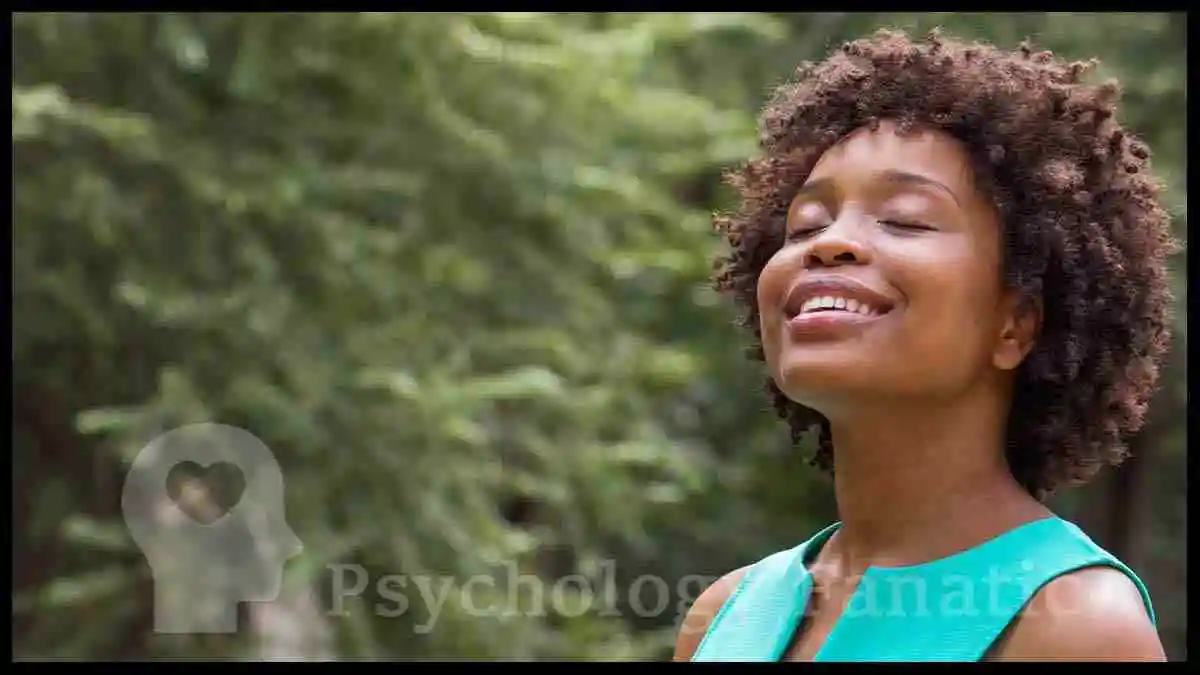
Carpe diem is commonly translated as “seize the day.” The phrase invites us to stop treating life as a rehearsal for some better future and to meet the day that is actually here. Its wisdom lies in engagement: noticing what matters, allowing experience to register, and doing something worthy with the time available.
This does not mean obeying every impulse or pretending that tomorrow has no claim on us. The choices of today become part of tomorrow’s conditions. A thoughtful carpe diem holds the present and the future together. It asks us to enjoy what is here, act where action is possible, and avoid sacrificing an entire life to a future that never quite arrives.
The present is not always pleasant. It may contain grief, fatigue, uncertainty, or unfinished work. Seizing the day therefore cannot mean manufacturing delight on command. It means remaining in contact with life as it is while choosing, as well as we can, how to participate in it.
Table of Contents
- What Does Carpe Diem Mean?
- Balancing the Present and the Future
- Mindful Attention and the Quality of a Moment
- Why Enjoying the Present Can Be Difficult
- Joy, Purpose, and a Worthwhile Life
- Mortality Awareness and the Value of Today
- How to Seize the Day Through Valued Action
- Associated Concepts
- A Few Words by Psychology Fanatic
- References
What Does Carpe Diem Mean?
The familiar phrase comes from the Roman poet Horace: carpe diem, quam minimum credula postero—pluck the day, trusting as little as possible in the next (Horace, 23 BCE/2004). The line recognizes uncertainty. Tomorrow matters, but it is not promised and cannot be lived in advance.
Carpe diem is best understood as a call to make meaningful use of the present rather than postpone living indefinitely. Meaningful use may include pleasure, but it may also include tending a relationship, beginning difficult work, resting, apologizing, learning, or declining an opportunity that does not fit our values. The phrase supplies urgency; it does not decide what deserves our time.
Julian Baggini makes this qualification central. Seizing the day does not tell us what matters; we must first decide what is worth seizing. Otherwise, urgency can become another form of grasping. A worthwhile life includes moments to cherish, but it also needs a way of living that is valuable in itself (Baggini, 2005).
Balancing the Present and the Future
A reckless reading of carpe diem says, “Do what feels good now and let tomorrow absorb the cost.” That interpretation confuses presence with shortsightedness. Psychology Fanatic’s discussion of future-oriented thinking offers the needed balance: useful future thought brings likely consequences into present awareness. It helps us ask what today’s choice will make more likely.
A present choice may honor the future by saving money, keeping a promise, attending a medical appointment, or tolerating the discomfort of beginning. Another choice may honor life by closing the laptop, sharing a meal, or taking needed rest. The question is not whether pleasure or responsibility always wins. The question is whether the action fits both the needs of this moment and the commitments that give our lives direction.
The danger runs in both directions. Impulse can mortgage the future, while endless preparation can mortgage the present. We may tell ourselves that we will live fully after the promotion, after the children are grown, after the debt is paid, or after we finally feel certain. Practical constraints are real, but “later” can also become a habit of absence.
Mindful Attention and the Quality of a Moment
Mindfulness begins with a simple act: noticing what is happening now before rushing to judge it. Jon Kabat-Zinn described this as intentional, present-moment, nonjudgmental awareness (Kabat-Zinn, 2003). It is a skill developed through practice, not an instruction to feel calm or enjoy everything. Psychology Fanatic’s discussion of the present moment makes the practical connection clear: a moment cannot be fully inhabited while our attention is entirely elsewhere.
We often leave the present without moving. We rehearse a conversation, scroll past our own fatigue, compare an ordinary afternoon with someone else’s carefully displayed life, or convert a pleasant experience into evidence that we should be happier. Attention becomes divided between experience and evaluation. What is happening receives less of us than the story about what should be happening.
Returning does not require a dramatic exercise. It may begin by noticing the person speaking, the body asking for rest, the taste of a meal, or the first concrete step in a task. Such attention does not make pain disappear. It makes the experience more available for an honest response.
Why Enjoying the Present Can Be Difficult
Modern busyness can make enjoyment feel suspicious. Rest must improve productivity. A walk must count as exercise. Time with friends must support networking or health. When every activity must justify itself through a later payoff, even leisure becomes another assignment.
Across four studies involving 1,310 participants, Gabriela Tonietto and colleagues found that people who viewed leisure as wasteful reported less enjoyment of leisure activities. Experimental prompts that framed leisure as wasteful also reduced enjoyment of activities pursued for their own sake. The studies do not imply that responsibilities are irrelevant. They show that a general belief about the uselessness of leisure can follow us into the very moments set aside for restoration and pleasure (Tonietto et al., 2021).
Carpe diem makes room for experiences whose value is not deferred. Conversation, music, play, solitude, and time in nature may matter without becoming tools for some other achievement. Enjoyment is not the whole of a good life, but a life that treats every unproductive moment as wasted may become strangely unavailable to the person living it.
Joy, Purpose, and a Worthwhile Life
The original article distinguished joy from the endless pursuit of pleasure. That distinction remains important. In eudaimonic well-being, a good life concerns purpose, growth, relationships, and the expression of human capacities. Pleasure belongs within that life, but it does not define the whole.
Rollo May described joy as an emotion connected with using our powers and fulfilling our nature. His language is philosophical rather than an experimental finding, yet it captures something the phrase “seize the day” often misses. A day may be deeply lived through effort, contribution, courage, and connection even when it is not especially comfortable (May, 1953/2009).
Sonja Lyubomirsky, Kennon Sheldon, and David Schkade drew a useful distinction between changing our circumstances and changing what we repeatedly do. They proposed that chosen activities may support well-being when those activities fit the person and are varied and sustained. The model does not imply that effort can erase hardship or structural limits (Lyubomirsky et al., 2005).
Seizing the day, then, may be less about finding an exceptional experience and more about participating in an ordinary one with intention. We become who we are partly through repeated acts: the call returned, the craft practiced, the boundary kept, the kindness offered, and the rest accepted before exhaustion makes the decision for us.
Mortality Awareness and the Value of Today
Carpe diem carries an awareness of mortality. Our time is limited, and that limit gives choices weight. Yet reminders of death do not produce one predictable response. Mortality can sharpen appreciation, evoke anxiety, strengthen familiar beliefs, or lead us to avoid the subject altogether. A thoughtful article should not turn death awareness into a guaranteed route to gratitude.
Enny Das and colleagues studied 229 visitors who experienced an art-based death meditation, completed a standard death-reflection exercise, or entered a neutral comparison group. The art experience left participants feeling more moved and connected and encouraged reflection after the visit. However, the groups did not show the predicted difference in how appreciation of life changed over time. Only 105 people completed the follow-up, and participants selected their own condition, so the findings should be read cautiously (Das et al., 2024).
The careful conclusion fits the spirit of carpe diem. Remembering that life ends may invite us to look again at what we are doing with it. The reminder is not required to feel inspiring. It can simply interrupt the assumption that important conversations, meaningful work, and ordinary affection can always be postponed.
How to Seize the Day Through Valued Action
“If not now, when?” can be a useful question, but delay is not always laziness. Difficult tasks often carry boredom, uncertainty, fear of failure, shame, or resentment. Postponement may provide immediate relief from those feelings, even when it creates later costs.
Fuschia Sirois describes procrastination as unnecessary delay despite expected harm and reviews it through mood and emotion regulation. Stress can be both a consequence of procrastination and a condition that makes it more likely by reducing the resources available for tolerating difficult task-related emotion. This account supports a more compassionate approach without pretending that delay has no consequences (Sirois, 2023).
Choose One Valued Next Step
Seizing the day becomes practical when it is translated into one action small enough to begin. The action should serve something you value rather than merely reduce the discomfort of feeling behind. This is the movement from values toward committed action. It might be ten attentive minutes with someone you love, opening the document you have avoided, taking the walk your body needs, or making an appointment that protects your future.
Before acting, ask what makes the step difficult. If the barrier is exhaustion, rest may be the responsible action. If the barrier is fear, a smaller exposure may be more workable than a demand for instant courage. If the barrier is uncertainty, gathering information may be the first honest move. If the activity no longer matters, letting it go may free attention for a commitment that does.
Then enter the action itself. Let the walk be a walk, the conversation be a conversation, and the work be the work in front of you. A meaningful day need not be dramatic. It needs enough attention and choice to become part of a life you recognize as your own.
When a valued intention needs structure, a workable plan can translate the next step into a realistic time, place, and action.
A Few Words by Psychology Fanatic
The day arrives without asking whether we feel ready. Some days offer beauty freely. Others arrive crowded with obligation, disappointment, or pain. Seizing the day does not require us to call every experience a gift. It asks that we remain present enough to recognize what the moment permits.
We can enjoy without clutching, prepare without disappearing into tomorrow, and act without pretending that every barrier is a failure of will. The present is where affection is expressed, work begins, rest occurs, and direction changes. Carpe diem is an invitation to meet that reality with attention and purpose. Seize the day, my friends.
Associated Concepts
- Present moment awareness: Attending to current experience without immediately turning it into a judgment about how the moment should feel.
- Future oriented thinking: Representing possible outcomes and using them to guide present choices.
- Eudaimonia: Well-being organized around purpose, growth, relationships, and the development of human capacities.
- Fleeting emotions: The changing feelings that color a moment without necessarily determining the wisest response.
- Procrastination: Unnecessary delay that often provides short-term emotional relief while increasing later costs.
- Organismic Integration Theory: A framework for understanding how actions become more autonomous as their reasons are internalized and integrated.
References
Baggini, Julian (2005). What’s It All About? Philosophy and the Meaning of Life. Oxford University Press. ISBN: 9780195315790.
(Return to Main Text)
Das, Enny; Fransen, Marieke L.; Oliver, Mary Beth (2024). Beyond the denial of death: Death meditation increases a sense of connectedness and appreciation of life. Frontiers in Psychiatry, 15, 1477479. DOI: 10.3389/fpsyt.2024.1477479.
(Return to Main Text)
Horace (23 BCE/2004). Odes and Epodes (Niall Rudd, Trans.). Harvard University Press. ISBN: 9780674996090.
(Return to Main Text)
Kabat-Zinn, Jon (2003). Mindfulness-based interventions in context: Past, present, and future. Clinical Psychology: Science and Practice, 10(2), 144–156. DOI: 10.1093/clipsy.bpg016.
(Return to Main Text)
Lyubomirsky, Sonja; Sheldon, Kennon M.; Schkade, David (2005). Pursuing happiness: The architecture of sustainable change. Review of General Psychology, 9(2), 111–131. DOI: 10.1037/1089-2680.9.2.111.
(Return to Main Text)
May, Rollo (1953/2009). Man’s Search for Himself. W. W. Norton & Company. ISBN: 9780393333152.
(Return to Main Text)
Sirois, Fuschia M. (2023). Procrastination and stress: A conceptual review of why context matters. International Journal of Environmental Research and Public Health, 20(6), 5031. DOI: 10.3390/ijerph20065031.
(Return to Main Text)
Tonietto, Gabriela N.; Malkoc, Selin A.; Reczek, Rebecca Walker; Norton, Michael I. (2021). Viewing leisure as wasteful undermines enjoyment. Journal of Experimental Social Psychology, 97, 104198. DOI: 10.1016/j.jesp.2021.104198.
(Return to Main Text)
Last Updated: September 29, 2026