
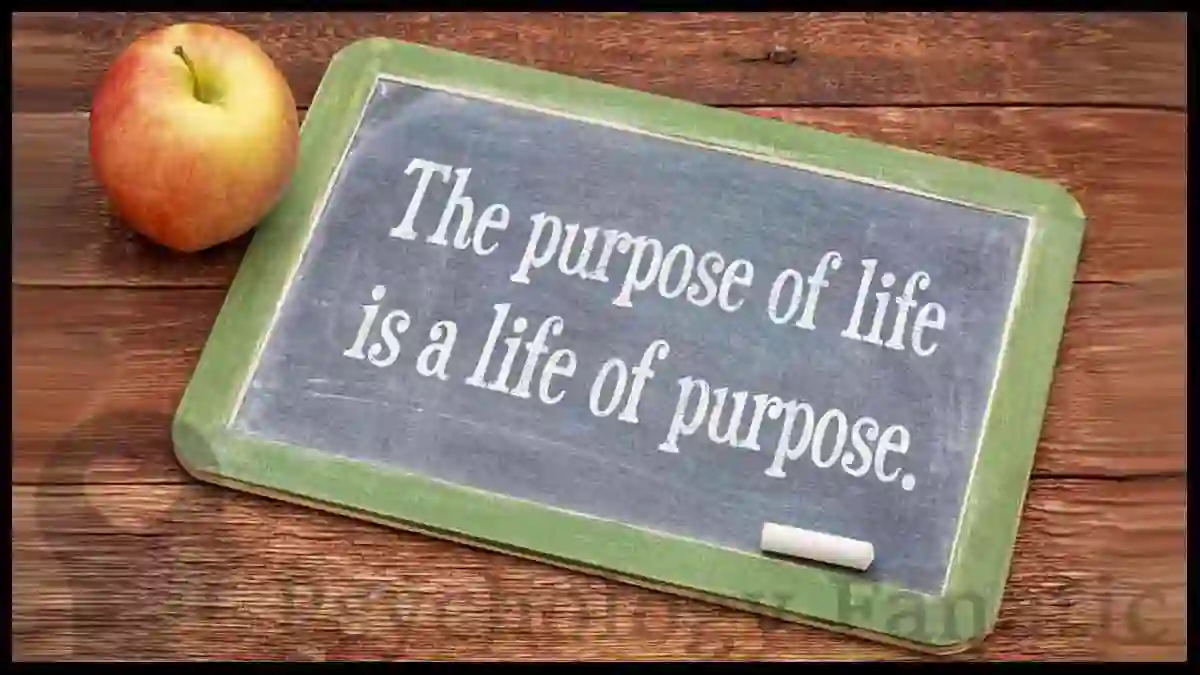
Existential Funk: Seeking Meaning in Life
We want meaning. We want the sorrows to have a worthy purpose. When life has meaning, the humdrum existence transforms into flowing riches. Without purpose, life is mundane; the depressing routine of industrialization depresses the soul. Human societies always sought meaning—often finding it through religion—a divine purpose that eases hardships. Songs, ceremonies, and faith alleviates the anxiety of survival. When life loses meaning, the whole texture of existence feels flat. We fall into a funk, suffering from an existential crisis. Troubles, hurts, and loss overwhelm emotions, challenging meanings and leaving us in despair.
Having purpose in life is more than something nice; it is a fundamental human need. However, achieving a sense of purpose and maintaining a foundational sense of meaning is not so easy. We find ourselves standing on shaky ground of meaning before tragedy, unprepared to withstand the waves of meaninglessness when life shatters the little meaning we had to grasp on to. In these moments, we experience confusing and chaotic existential funk.
Key Definition:
An existential crisis is a period in life where events, often traumatic, create doubt and confusion, accompanied by a distinct impression that life lacks meaning.
An Existential Crisis
Disappointing experience without a grander purpose, dampens hope. We are challenged to shift beliefs when experience fails to fit our expectations. When we lose the secure footing of purpose, a cloud obscure the brightness. We may wonder, “what’s it all for?” In these empty moments, we are susceptible. Almost any meaning can swoop down and fill the hungry void. But is this what we want—just to fill a void?
“Modern life has a way of distracting people from their true goals and many people find it hard to define their purpose in life”
We shouldn’t blindly accept comforting explanations in these pivotal moments, we need something substantial and constructive, willing to temporarily exist in the unknown. Our very existence holds meaning. We can discover purpose in all aspects of our lives. And purpose dispels the fog of existential funk.
My Existential Crisis
It’s been over a decade since my skeptical examination of childhood beliefs. The accumulating experiences as a big city police officer collided with fundamental beliefs. Because these beliefs were foundational to my family, searching beyond these confining borders was strictly forbidden. Any critical examination of even the possibility of error of the family belief system elicited guilt, secrecy and depression. My journey wasn’t simply drifting away but an active and intentional examination, motivated by looming unanswered questions.
During the uncertainty, I devoured dozens of books—in and outside of my church. The internal conflict was intense. Finally, on one dreadful evening, the search came to an end. At the time, I commuted over sixty miles to the big city for work. This commute provided time to contemplate—forced silence, and heavy thoughts. Alone in my car, radio turned off, a thought quietly settled, it returned a second time but much loader, the third time I whispered the words, “It’s not true.” All the past meaning—everything I explained the world by—it wasn’t true.
”We are all hungry for meaning, for purpose, for the feeling that our life is worth more than the sum of its parts.”
Previously everything fit into this neatly packaged design, explaining existence. Now that was gone. Finished with the examination, I came to the best conclusion I could—it wasn’t true. Tears began to fall. Purpose and meaning were always a given in my life; now they were gone.
I pictured my past life as a perfectly set dinner table. Dishes, salad plates, glasses and silverware set in perfect order. This new conclusion yanked the beautiful table cloth from the table, sending the dishes, glasses, and utensils crashing chaotically to the ground; scattered without purpose, meaning, or design, “What’s it all for?” permeated my life. I entertained thoughts of experiencing previously forbidden pleasures without guilt. But pleasure still existed with guilt. Depression, not freedom, is what I found.
Personal Searches for Meaning
I neither suggest nor discourage engaging in a similar journey in a search for meaning. If you doubt, then seek. Sometimes our beliefs suit us well. They give the stability we need to function at high levels. We should follow the path that gives richness without infringing on other’s joys.
Occasionally, I wish to return to the past; but knowledge can’t be unlearned. The existential funk that followed eventually led to new endeavors. One of these endeavors was the creation of the Psychology Fanatic (previously known as Flourishing Life Society). This page is a source of personal meaning. I devout much time to the research, thought, and writing, hoping to keep the Psychology Fanatic website inspiring and provocative. I also discovered meaning in other areas of my life. Meaning is found in everyday moments. My life has become rich and vibrant.
Viktor Frankl proclaimed that “the problem in modern industrial society is that people feel existential frustration and meaninglessness in life and argues that when people find meaning and purpose, they are able to overcome hardships and frustration and even willing to sacrifice their own lives” (Lee et al., 2017).
See Meaning of Life for more on this topic
”The point is not what we expect from life, but rather what life expects from us.”
Existential Funk
We—on occasion—spiral into existential funk. I still do from time to time. A predetermined meaning to life makes everything a little neater. A larger than life explanation frees us from the personal work of creating meaning. But purpose created within the boundaries of reality liberates us. We are free to create meaning that transcends the monotony of daily routines. Human consciousness can create meaning for itself.
Life challenges, our emotions arouse, and we sink into a crisis. Jeremy Dean, Ph.D., founder of PsyBlog, warns that things “tend to go better if worry prompts problem-solving than if it prompts existential crisis” (Dean, 2013). The idea is simple. Life woes that ignite action to improve life is better than life woes leading to a stupor of thought, and endlessly pondering: “What is it all for anyway.”
Perhaps, this is inline with Friedrich Nietzsche’s philosophy of human meaning.
According to Nietzsche:
“Human beings create the value they embody by living experimentally and by nurturing an environment that propagates great people and high culture. Existence and the world are justified as aesthetic phenomena in that the highest artistic creations are great human beings themselves” (Belliotti, 2011).
”In the midst of living, we’re in no position to discern whether our lives matter, and stepping outside of the process of existence to answer is impossible.”
Resolving the Existential Funk
To be fully engaged feels meaningful. An engaging task demands focused attention (Murphy, 2019). The task then produces meaning. Each task is not equal in meaning. The value of a task depends upon the end goal. Mowing the lawn has less value than raising a child. But both can be engaging; they both can demand focused attention—and offer meaning.
We create a purposeful life by engaging in these meaningful activities. Feelings of meaninglessness arise when the actions aren’t given attention; the repetitiveness conceals the purpose. We act without thought. The action may accomplish some goal; but the sense of accomplishment is obscured because of lack of engagement. We often walk through life in robot mode: get up; go to work; eat; watch television, and back to bed.
No engagement, no meaning, and no excitement. We must escape this existential funk by doing something novel.
If, for example, I mow the lawn every Saturday morning, the action easily becomes a habit. Instead of mowing the lawn to accomplish a meaningful goal, I now mow the lawn because it’s Saturday. The meaning becomes obscure. Mowing the lawn then becomes a meaningless chore. But if I take time to enjoy the look of the well-manicured yard, the scent of the fresh cut grass and the exercise, the task takes on meaning and the meaning generates feelings of accomplishment. The task is performed with a goal; and goal fulfillment creates purpose.
Giving Life Meaning
We can pack our lives with meaningful activities but when we disconnect from the purpose behind those activities by haphazardly acting just out of habit, our lives feel empty. Even something as important as raising children feels meaningless when we overlook the purpose.
Mindfulness of the Moment
Mindfully focusing on meaning gives texture and color to experience. Life only has meaning when living means something. Fill your life with purposeful activities. This must include substantial relationships—human involvement. We don’t fare well alone. We need people. Human interaction is full of purpose and meaning. Some endeavors should focus on the future, creating security. We treasure survival-oriented actions. When behaviors secure future health and survival, we feel accomplishment.
See Psychology of Mindfulness for more on this topic
Enjoyable Hobbies
Hobbies can significantly contribute to giving life meaning by providing a sense of purpose and fulfillment beyond the daily routines of work and obligations. Engaging in activities we genuinely enjoy allows us to tap into our passions, explore our creativity, and cultivate a sense of mastery. Whether it’s painting, playing a musical instrument, gardening, or building models, hobbies provide an outlet for self-expression and allow us to connect with something larger than ourselves (Murphy, 2016). This sense of engagement and accomplishment can counteract feelings of boredom, apathy, or meaninglessness, offering a refreshing perspective and a renewed appreciation for life.
Furthermore, hobbies often foster a sense of community and connection. Many hobbies involve joining groups, attending workshops, or participating in online forums, creating opportunities to interact with like-minded individuals who share our interests. This sense of belonging and shared passion can be incredibly rewarding, providing a support system and a sense of camaraderie. Hobbies also offer a valuable way to disconnect from the pressures of modern life, allowing us to unwind, de-stress, and recharge our batteries. By dedicating time to activities we love, we invest in our own well-being and create a more meaningful and fulfilling life.
Personal Goals
We need a set of our own goals. Not objectives set by society or family. Michaela Schippers and Niklas Ziegler wrote that “goal attainment from self-concordant goals, or goals that fulfill basic needs and are aligned with one’s values and passions, have been related to greater subjective well-being, higher vitality, higher levels of meaningfulness, and lower symptoms of depression” (Schippers & Ziegler, 2019). having passionate purpose is essential to wellness (Murphy, 2020).
A Few Words by Psychology Fanatic
In our quest for meaning, the struggles we face often reveal the depth of our humanity. The existential funk that occasionally envelops us serves as a reminder that life is not merely about existing but about actively seeking purpose amidst chaos. As we navigate through disappointments and uncertainties, it becomes crucial to acknowledge that every moment holds potential for significance. By focusing on what truly matters—whether it’s through relationships, hobbies, or personal pursuits—we can transform fleeting moments into lasting joy and fulfillment.
Ultimately, the journey towards understanding our existence is one filled with opportunities to forge connections and create meaningful experiences. Just as societies throughout history have searched for divine purpose to alleviate life’s burdens, we too can cultivate an inner reservoir of strength by engaging in activities that resonate with our values and passions. Embracing this active pursuit allows us to rise above the mundane routines of life and carve out a vibrant path filled with intention. With mindfulness and commitment to meaningful living, we can transcend moments of despair and emerge stronger, more enriched individuals ready to embrace whatever lies ahead.
Associated Concepts
- Eudaimonia: This is a Greek term often translated as ‘happiness’ or ‘well-being.’ It represents a state of flourishing, where an individual experiences a sense of fulfillment, purpose, and overall thriving in life.
- PERMA Model: This model, developed by psychologist Martin Seligman, is a well-being theory that identifies five essential elements for a flourishing and fulfilling life: positive emotions, engagement, relationships, meaning, and accomplishment.
- Rich, Meaningful Life: This typically refers to living in a way that aligns with one’s values, beliefs, and passions. It often involves engaging in activities and relationships that bring a sense of fulfillment, purpose, and satisfaction.
- Human Flourishing: This refers to a state of optimal well-being and fulfillment in various aspects of one’s life. It involves experiencing positive emotions, engaging in meaningful activities, cultivating strong relationships, and achieving a sense of purpose and personal growth.
- Growth Motivation: This refers to the inner drive or desire to continuously develop and improve oneself, whether it be in personal, professional, or emotional aspects. Individuals with growth motivation are often focused on setting and achieving goals, expanding their knowledge and skills, and adapting to new experiences.
- Self-Actualization: Abraham Maslow’s concept of self-actualization, which refers to the realization of one’s potential and the pursuit of personal growth, aligns well with the concept of eudaimonia.
References:
Belliotti, Raymond Angelo (2011). Dante’s Deadly Sins: Moral Philosophy In Hell. Wiley. ISBN: 9780470671054
(Return to Main Text)
Dean, Jeremy (2013). Making Habits, Breaking Habits: Why We Do Things, Why We Don’t and How to Make Any Change Stick. Da Capo Lifelong Books. ISBN: 9780738215983
(Return to Main Text)
Lee, Jaywon; Cho, Dongjoon; Suh, Yu Jin (2017). Purpose and meaning in life and job satisfaction among the aged. The International Journal of Aging and Human Development, 85(4), 377–402. DOI: 10.1177/0091415016688305.
(Return to Main Text)
Murphy, T. Franklin (2019). Exploring the Flow State: Enhancing Focus and Productivity. Psychology Fanatic. Published: 3-14-2019; Accessed: 2-21-2025. Website: https://psychologyfanatic.com/flow-state/
(Return to Main Text)
Murphy, T. Franklin (2020). Unleashing Passion and Purpose: Transforming Mundane Days. Psychology Fanatic. Published: 2-3-2020; Accessed 2-21-2025. Website: https://psychologyfanatic.com/passion-and-purpose/
(Return to Main Text)
Murphy, T. Franklin (2016). Leisure Activities for Stress Relief and Joy. Psychology Fanatic. Published: 3-18-2016; Accessed: 2-21-2025. Website: https://psychologyfanatic.com/leisure-activities/
(Return to Main Text)
Schippers, Michaela; Ziegler, Niklas (2019). Life Crafting as a Way to Find Purpose and Meaning in Life. Frontiers in Psychology, 10. DOI: 10.3389/fpsyg.2019.02778
(Return to Main Text)
Last Update: November 14, 2025