
Lessons in Narcissism: The Roadway as a School of Social Psychology
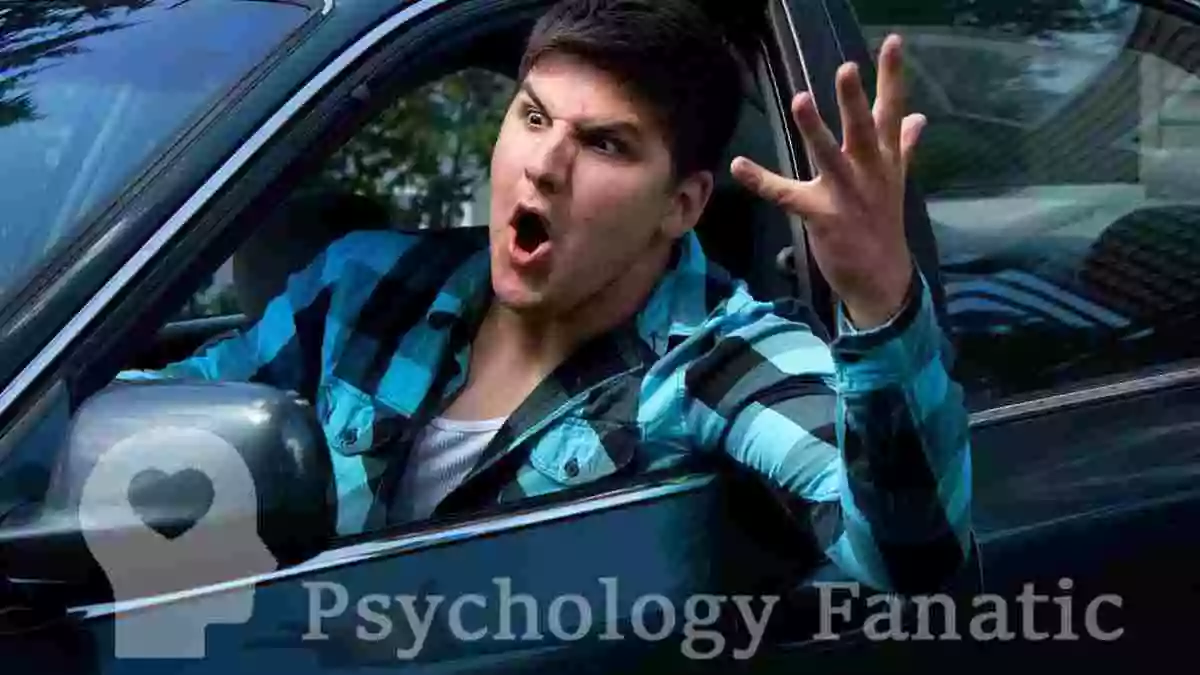
The roadways are full of impatient, uncourteous drivers with their anger to explode at the slightest perceived wrong. They irritate me. Their arrogant, narcissistic aggression against unsuspecting victims sours moods, taints the moment, and invades the mind with toxic ruminations. The roadway is a social experience, full of micro social interactions. The narcissistic driver is more than an irritation; they are a professor of social psychology, teaching intriguing lessons in narcissism.
Narcissistic Behaviors vs. Narcissistic Personality Disorder
Short interactions on the freeway are woefully insufficient to diagnose an illness or label someone definitively as narcissistic. In our fast-paced lives, we may observe behaviors that appear self-centered or aggressive; however, these actions often stem from momentary frustrations rather than a true reflection of one’s character. Irrational behavior is something that everyone experiences at times, influenced by stressors such as time constraints and external pressures. This raises a critical point about human psychology: we all act differently depending on the context in which we find ourselves. In the car, surrounded by other drivers who may be equally stressed or impatient, it can be easy to fall into patterns of thought and behavior that are less than ideal.
Driving brings out various facets of our personalities—often revealing darker traits when faced with road congestion or perceived slights from fellow motorists. It is during these moments that many individuals become what could be described as “narcissistic demons,” unleashing pent-up frustration onto unsuspecting targets around them. The anonymity provided by being inside a vehicle allows people to express their aggression without fear of immediate consequences, leading to reactions driven more by impulse than rationality.
As we navigate through traffic, it’s essential to remember that while these fleeting interactions don’t define us entirely, they do provide insight into how situational factors can exacerbate underlying personality traits and lead to irrational behavior in even the most balanced individuals.
See Narcissistic Personality Disorder for more on this topic
The Narcissistic Encounter
Typically, I refrain from retelling the small annoyances I encounter. I find using an article to dress down an anonymous person distasteful. However, I’m going to violate my rule. Reframing a roadway experience, utilizing my psychology background to expand our understanding of narcissistic behaviors that we may encounter in life. The roadway often provides lessons in narcissism.
I live in a populated California city. Large multi-lane freeways inch along at ridiculously slow speeds during peak hours. To control freeway traffic during commute time, many freeway on-ramps are controlled with a metering light. Every fifteen seconds or so the light turns green and a waiting driver proceeds forward down the entry ramp for the freeway. These entry ramps are long enough to pick up sufficient speed to allow for a smooth merge with the regular flow of freeway traffic.
Merge lanes create a perpetual flow of social interaction between the drivers of merging cars and the drivers of cars in the far right lane of the freeway. Entering drivers should increase or slow their speed to slip in between vehicles, while cars on the freeway should leave sufficient space for entering cars to enter. The interaction is not completely dependent on either driver, but a healthy social interaction that doesn’t create a need for extreme evasive actions to avoid a collision. Here is where my personal story of driving irritation begins.
Incompatible Behaviors Create Conflict
Yesterday, I had a morning appointment on the other side of town, requiring a short drive on the freeway. My light turned green, I quickly accelerated to freeway traffic speed and merged into the ‘slow’ lane. I could see a car barreling through traffic behind me approaching at a rapid pace. By the time this speedster caught up to me, I was travelling at about 65 mph, not quite cruising speed but certainly about as fast as most normal cars can attain before the end of the on-ramp. When a car is travelling 90 mph and shifting in and out of lanes, not much a merging car can do. The two speeds are incompatible for a smooth merge.
The speeding car’s horn wailed as the driver made an unnecessary and dangerous maneuver across multiple lanes of traffic to get around me. The car then swerved back to slow lane and exited the freeway. When another driver rudely blasts their horn or waves the condemning finger bird, their indictment of your action stings. We ruminate; we defend our position; we write a blog.
Frustration Tolerance
Taking a look at this frequent style of road encounter through a psychological perspective, provides a lesson in narcissism that enlightens and, perhaps, sends warning signals to examine some of our own misbehaviors and faulty perceptions that interfere with peace of mind and wellness.
Road rage is a response to disrupted homeostasis. Our biological system is humming along within a window of wellness. Our predictions of short and long term futures are meshing with current circumstances. When an event or person contradicts the prediction, our system alarms, emotions surge, and change must be made. Adapting requires unplanned energy, placing new demands on our carefully budgeted energy disbursement plans.
These disruptions (large and small) are frustrating. We are equipped with biological and learned resources for tolerating frustrations. Some have large tolerance windows, others something much narrower. A slow moving car merging onto the freeway sends some into an emotional tizzy while others hardly even register the common occurrences worthy of noting. Studies have found those prone to avert aggression often score high on inventory tests measuring affect intensity for anger and Frustration (AIAF) (Park et al., 2014).
See Frustration-Aggression Hypothesis for more on this topic
Narcissistic Predictions; Selfish Expectations
The narcissistic prediction, being self-focused, often fails, leading to more frustration. For example, let’s look at my merging encounter through the narcissistic prediction lens. The other driver was late, or perhaps always drives like a madman. The adrenaline aroused his system and he was driving fast. As he came within a half mile of his off-ramp, he saw the outside lane open. He moved to that lane and accelerated. His prediction was to use the open lane at a blistering pace all the way to his exit.
His prediction was busted because he failed to calculate the steady stream of cars entering and merging onto the freeway. Narcissists notoriously fail to calculate the presence of other autonomous human beings in their predictions. The prediction is framed around “what I want,” and “what I think I can do.”
In the frightening book the Narcissism Epidemic Jean M. Twenge and W. Keith Campbell write that the narcissist “lives in a state of restless, perpetually unsatisfied desire” (Twenge & Campbell, 2010). When reality has no way of accommodating expectations, the person is habitually unsatisfied. When narcissistic expectations are built upon ignorance of competitive autonomous others, the end is disappointment.
Predictions and Others
A healthy prediction considers others. In this case, understanding that the outside lane is the only option for merging cars, and that the drivers have little options to accommodate for a speeding car several hundred meters behind them. You can’t stop in the merge lane, allowing the speeder to pass, without creating a serious hazard. Understanding these nuances of the social interaction of merge lanes mitigates the self-focused desire of “I want to drive in this lane at my own self-determined speed.”
The narcissist has a “craving to be freed from the risks of responsibility, of freedom, of awareness; his longing for unconditional love, which is offered without any expectation of his loving response” (Fromm, 2010).
Theory of Mind
Children learn early in development that others have thoughts and motivations independent of the person observing them. Psychologists refer to this as theory of mind. I suppose that narcissistic behaviors come from either failure to consider that others have autonomous thoughts, motivations, and circumstances or complete apathy towards others autonomy. The latter being more dangerous. Whether in ignorance or apathy, predictions fail or spitefully hurt. Ignorance of others is not hateful or purposely manipulating attitude. Ignorance of others is simply a glaring blind spot interfering with healthy cognitions. I recently encountered this on a pizza night with an acquaintance.
The other night, while out with family and friends, we went to a local pizza place. Frank’s Fiasco was one of the pizzas we decided on. It is loaded with toppings, thick crust, and anchovies. I’m not a big pizza eater. However, when I eat pizza, I prefer a simple pizza, one or two toppings, and a salad on the side. After fifty-five years of experience, I have a pretty good idea of what kind of pizza I like. I added a second pizza to the order—a simple peperoni and mushroom. However, when my friend placed the order, he decided to change my expressed preference, ordering a five-topping, all meat pizza. “You’ll love this one, it’s much better than a pepperoni and mushroom.”
The underlying cognition is: I like this better, therefore, you’ll also like it better. A simple night at the pizza parlor may provide ample lessons in the characteristics of narcissism.
Maladaptive Narcissistic Thought
This malignant maladaptive thinking limits relationships. Under this frame of thought, we can’t resolve differences. Even if we articulate the facts behind our belief, those facts may not persuade someone to change because their narcissistic perception is my view is right, and anything different is wrong. Confrontation of this disjointed view of life doesn’t resolve anything. Because, of course, because the narcissist doesn’t respect the point of view that they are wrong. Again, we learn another important lesson in narcissism.
Different is not wrong. Apathy towards others desires is a different animal. These are the narcissists that may clearly hold a theory of your mind, understand what you like, and just not give a damn. They use their knowledge of your likes, fears, and sensitivities, not to bond, but as tools of manipulation.
The apathetic narcissists vary in severity and goals. Whether they seek money, glory, or just approval, they see others as pawns to be used in pursuit of these aims. They speak lovingly to your face, even order your favorite pizza, but then ignore boundaries, share your secrets, and speak ill of you to others.
Callous apathy is often more associated with psychopathy, one of the other personality types in the dark triad.
Associated Concepts
- Idealization of Self-Image: This is a defense mechanism that involves the tendency to perceive oneself as exceptionally positive, admirable, or flawless, often to cope with feelings of insecurity or inadequacy.
- Fragile Self-Esteem: People with narcissistic traits often have fragile self-esteem and are easily threatened by criticism or rejection.
- Healthy Narcissism: This refers to a stable, realistic sense of self-worth and confidence that is essential for psychological well-being. Unlike pathological narcissism, which is characterized by an inflated ego and disregard for others, healthy narcissism involves a secure self-concept, the ability to assert one’s needs, and the capacity to form genuine, empathetic relationships.
- Empathy Deficit Disorder: This is a disorder characterized by the trait of lacking ability to feel, understand and resonate with another’s feelings.
- Dark Triad Personalities: This refers to three socially aversive personality traits: narcissism, Machiavellianism, and psychopathy. These traits are characterized by self-centeredness, manipulativeness, callousness, and a lack of empathy.
- Narcissistic Personality Disorder: This is a mental condition characterized by an inflated sense of self-importance, a constant need for admiration, and a lack of empathy towards others. Individuals with this disorder often have a grandiose view of their own talents and achievements, and may seek to exploit others for their own gain.
A Few Words by Psychology Fanatic
Our roadways are littered with diverse driving personalities. Many successfully put away their roadway aggression and present a more amiable personality at the office and home. Perhaps, the weight of future accountability by those we continue to lean on for our wellness and success is enough to tame narcissistic impulses for most. The aggressive road behaviors of others, however, may represent a deeper narcissistic problem that spills over into many areas of their lives. We can learn from these lessons in narcissism.
Dealing with narcissistic behaviors on the roadway is simple, let them blow off their steam, honk their horn, and move on. Living with a full-blown narcissist is another problems all together. The solution is not as simple as taking the next off-ramp. However, the next off-ramp may be the solution to the relationship problem as well.
Last Update: January 16, 2026
References:
Fromm, Erich (2010) The Heart of Man: Its Genius for Good and Evil. American Mental Health Foundation. Basic Books. ISBN: 9781590561867
(Return to Main Text)
Park, A., Ickes, W., & Robinson, L.R. (2014). More f#!%ing rudeness: reliable personality predictors of verbal rudeness and other ugly confrontational behaviors. Journal of Aggression, Conflict and Peace Research, 6(1), 26-43. DOI: 10.1108/JACPR-04-2013-0009
(Return to Main Text)
Twenge, Jean M., Campbell, W. Keith (2010) The Narcissism Epidemic: Living in the Age of Entitlement. Simon & Schuster. ISBN: 978-1-4165-7599-3; APA Record: 2009-05058-000
(Return to Main Text)