
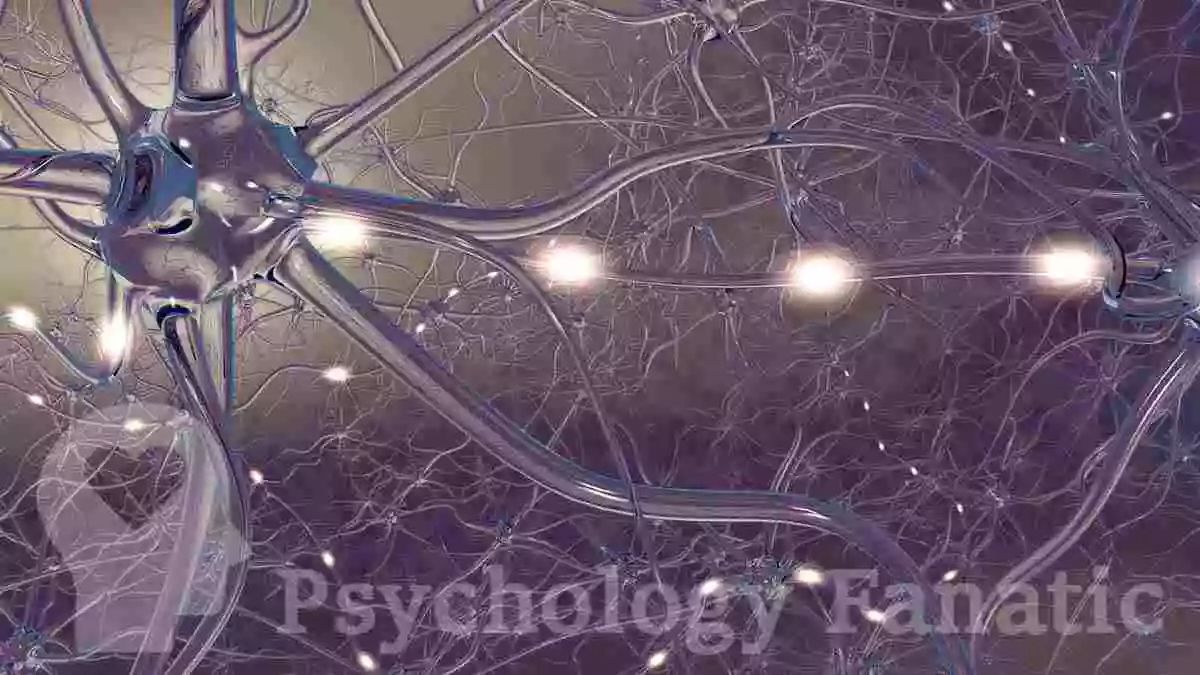
New Brain Connections and the Power of Learning
Our brains are fascinating! A young developing brain quickly adapts to experience. New brain connections form and unused connections die as the brain forms an economical and powerful agent of living. Early exposures shape the child’s future by forming the mode of processing experience. But brain plasticity doesn’t end at childhood. Brains remain malleable throughout our lives. We can change our brains which in turn, changes our lives.
As we navigate through life, every experience we encounter—whether joyful, challenging, or mundane—plays a crucial role in shaping our neural pathways. This ongoing process of brain plasticity allows us to learn new skills, adapt to various environments, and even recover from setbacks. The remarkable ability of our brains to reorganize and forge new connections is not just limited to learning academic concepts; it extends to emotional growth and the development of resilience. By actively engaging with our surroundings and embracing novel experiences, we can harness this neuroplastic potential to enrich our lives, cultivate meaningful relationships, and foster personal transformation at any age.
Key Definition:
Brain plasticity, also known as neuroplasticity, refers to the brain’s ability to reorganize itself by forming new neural connections throughout life. This adaptive capability allows the brain to compensate for injury and disease, and to adjust in response to new situations or changes in the environment. It is a fundamental property of the brain that underlies learning, memory, and recovery from brain injuries.
Introduction: The Changing Brain
The concept of brain plasticity has revolutionized neuroscience, as it highlights the dynamic and flexible nature of the brain, challenging the previously held belief that the brain’s structure and function are relatively fixed after a certain age. Research in this field has tremendous implications for understanding and treating various neurological conditions, as well as for developing strategies to enhance cognitive abilities and recovery processes. However, new neuronal connections slow with age—new experiences must compete with older established behaviors and passionate beliefs.
Brain plasticity is a crucial mechanism that enables the brain to adapt, learn, and recover, demonstrating the remarkable flexibility and resilience of the human brain.
Experience and Brain Structures
Experience etches meaning into the structure of the brain, creating foundations that persist with stubbornness, not easily abandoned for something new and unproven. This has functional benefits allowing for economical processing of experience, building upon the past instead of constantly relearning. An evolutionary construct creates a brain resistant to change as it develops—a structural design expressed as wisdom. But learning isn’t perfect. We include with wisdom misunderstandings, faulty associations, and deceptions.
We can rewire some of the stubborn brain connections with intentional mindfulness. The re-learning process requires slowing down, recognizing habitual responses, and then forcefully incorporating a new response. Consequently, this process forms new brain connections. Moving through the cycle a few times doesn’t create lasting change; the newness hasn’t yet taken root. We just forced a better reaction to a single event.
A single improved action may have a positive consequence, but this shouldn’t be confused with impactful transformations. The first may lead to a high score on a test; the second leads to an exceptional student.
“Today, it’s understood that the brain possesses the remarkable capacity to reorganize pathways, create new connections, and, in some cases, even create new neurons—a concept called neuroplasticity, or brain plasticity.”
London Cab Drivers and Brain Plasticity
Neuroscientist Eleanor Maguire of University College London, conducted an interesting study measuring the impact of navigating the crowded London streets on brain plasticity. The study, which spanned several years, discovered that London taxi drivers had larger-than-average hippocampi, a part of the brain associated with memory and spatial navigation. This enlargement was attributed to the intense training and memorization of the city’s streets required for their job, known as: The Knowledge. The study provided significant evidence of neuroplasticity, demonstrating that the adult brain can grow and adapt in response to demanding cognitive activities (Maguire, 2006).
Anders Ericsson and Robert Pool report that in contrast, “there was no change in the size of the posterior hippocampal among the prospective taxi drivers who had failed to become licensed” (Ericsson & Pool, 2016).
Markedly, driving around London on a vacation is likely to produce nothing more than frustration. However, the everyday grind of driving around the city streets signals a need for adaptation, and brain structures oblige.
Habits and Behavior Efficiency
We can’t monitor every thought, feeling or behavior. Habits (acts performed without thought) are essential for smooth functioning, freeing psychic space. Habits essential are new brain connections that create reactionary responses without conscious contribution. Basically, habits are an evolutionary design for high-level functioning. Cognitively directing every action slows functioning. Habitual behavior is good; but not always. Habitual thoughts, feelings and behaviors are subject to errors. Biases influence habitual functions, skewing thinking and blinding objectivity.
Brain plasticity, also known as neuroplasticity, is fundamentally related to the formation and change of habits. Here’s how:
- Experience-Dependent Neuroplasticity: This passive process reinforces habits by performing them unconsciously over and over again, whether they’re good or bad. Each repetition strengthens the neural pathways associated with the habit.
- Self-Directed Neuroplasticity: This active process involves consciously reflecting on how habits make us feel and intentionally rewiring the brain to create positive habits. It’s a powerful method to break undesirable habits and form new, healthy ones (McLachlan, 2021).
- Formation of Neural Pathways: Every habit we form reinforces a neural pathway in our brains. When we repeat a behavior, our brain finds it easier to perform that action over time, essentially ‘hardwiring’ it into our routine.
- Neurogenesis: The brain’s ability to grow new neurons and create new connections between existing ones can be influenced by learning new skills and having new experiences, which can include forming new habits (Park, 2024).
In essence, the plastic nature of the brain allows it to adapt and change in response to our actions and experiences, including the habits we develop and maintain. This means that with effort and practice, we can reshape our brain’s wiring to support the habits we want to cultivate.
“Certain brain structures are transformed when we read.”
Emotion and New Neural Connection in the Brain
Experience coupled with high emotion has a notable impact on brain structures.
Daniel Siegel, a prominent figure in the field of psychiatry and psychotherapy, explains:
“Emotion involves a modulatory process that enhances the creation of new synaptic connections via increases in neuronal plasticity. The ’emotion circuits of the brain’ that are activated when we have an emotionally engaging experience also serve as evaluative centers that directly influence our focus of attention and our state of arousal” (Siegel, 2020).
Emotional arousal systems are not stable. As children develop, they build structures between emotional arousal and behavior. When a parent guides them through the complex maze of emotion, structure inn the brain form to help the child regulate emotion as an adult. However, when emotional healthy regulation processes fail to develop, the child adapts in other ways.
Jaak Panksepp, an Estonian-American neuroscientist and psychobiologist, wrote:
“All basic emotional systems are plastic, getting sensitized (stronger) with use and desensitized (weaker) with lack of use” (Panksepp, 2009).
Basically, emotional arousal is essential for learning significant events. Siegel emphasizes the connection of these heightened arousals, neuronal plasticity and memory.
Siegel wrote that arousal leads to “enhanced encoding via increased neuronal plasticity and the creation of new synaptic connections and therefore increased likelihood of future retrieval” (Siegel, 2020).
Emotional reactions may correspond more to the past than the present, directing us away from encounters we should be moving towards, or pulling us towards clashes we should avoid. While skepticism of every thought, feeling or behaviors isn’t practical, blindly following them may trap us in unfulfilling pathways.
A Few Words from Psychology Fanatic
Flourishing requires using automatic processes for efficiency while curiously exploring the world beyond the comfort zones, adding new wisdom through mindful thought. We may not always enjoy the drudgery of change but can carefully select a few areas to examine and refine.
When we recognize triggers that set off powerful emotions, we gather glimpses of the automatic processes at work, dragging us through the same sequences that caused pain in the past. As we practice more intelligent responses, patiently continuing to implant new habits, our hard-wiring begins to transform, new brain connections form and we literally begin to think in new ways.
Associated Concepts
- Enriched Environments: This refers to a stimulating and intellectually engaging setting that provides a wide range of experiences for an individual, particularly during critical periods of development.
- Self-Organization: This concept refers to an automatic process within complex systems to reorganize without conscious control to integrate new and disrupting elements.
- The Differential Susceptibility Theory (DS): This theory explores the interplay of genes and environment, challenging fixed vulnerability notions. It highlights individual plasticity, suggesting people respond differently to positive and negative experiences.
- Reciprocal Gene-Environment Model: This model suggests that a person’s genetic makeup can influence the likelihood of encountering certain environments that trigger mental health issues, creating a reciprocal relationship between genes and the environment.
- Habit Formation: This refers to the process by which new behaviors become automatic responses to specific stimuli through repeated association. According to behaviorist theory, behaviors are acquired through the process of conditioning, where a stimulus triggers a specific response.
- Neural Synchrony: This refers to the occurrence of neurons and brain networks firing together. A process that increases likelihood that the neurons will fire together under similar circumstances.
- Automatization Theory: This theory explains how tasks become automatic through practice and repetition, impacting cognitive, motor, and social skills. The theory involves three stages: cognitive, associative, and autonomous.
References:
Ericsson, Anders; Pool, Robert (2016). Peak: Secrets from the New Science of Expertise. Houghton Mifflin Harcourt. ISBN: 9780544456235.
(Return to Main Text)
Maguire, Eleanor A.; Woollett, Katherine; Spiers, Hugo J. (2006). London taxi drivers and bus drivers: A structural MRI and neuropsychological analysis. Hippocampus, 16(12), 1091–1101. DOI: 10.1002/hipo.20233.
(Return to Main Text)
McLachlan, Stacey (2021). The Science of Habit. Healthline. Published: 12-22-2021; Accessed: 3-11-2024. Website: https://www.healthline.com/health/the-science-of-habit#1
(Return to Main Text)
Panksepp, Jaak (2009). Brain Emotional Systems and Qualities of Mental Life From Animal Models of Affect to Implications for Psychotherapeutics. In Daniel J. Siegel, Marion Solomon, and Diana Fosha (eds.), The Healing Power of Emotion: Affective Neuroscience, Development & Clinical Practice. W. W. Norton & Company; 1st edition. ISBN: 9780393705485
(Return to Main Text)
Park, Julie (2024). Rewiring your brain: How Neuroplasticity Shapes our Habits and Health. Muse. Published: 1-24-2024; Accessed: 3-11-2024. Website: https://choosemuse.com/blogs/news/rewiring-your-brain-how-neuroplasticity-shapes-our-habits-and-health
(Return to Main Text)
Siegel, Daniel J. (2020). The Developing Mind: How Relationships and the Brain Interact to Shape Who We Are (3rd edition). The Guilford Press. ISBN: 9781462542758.
(Return to Main Text)