
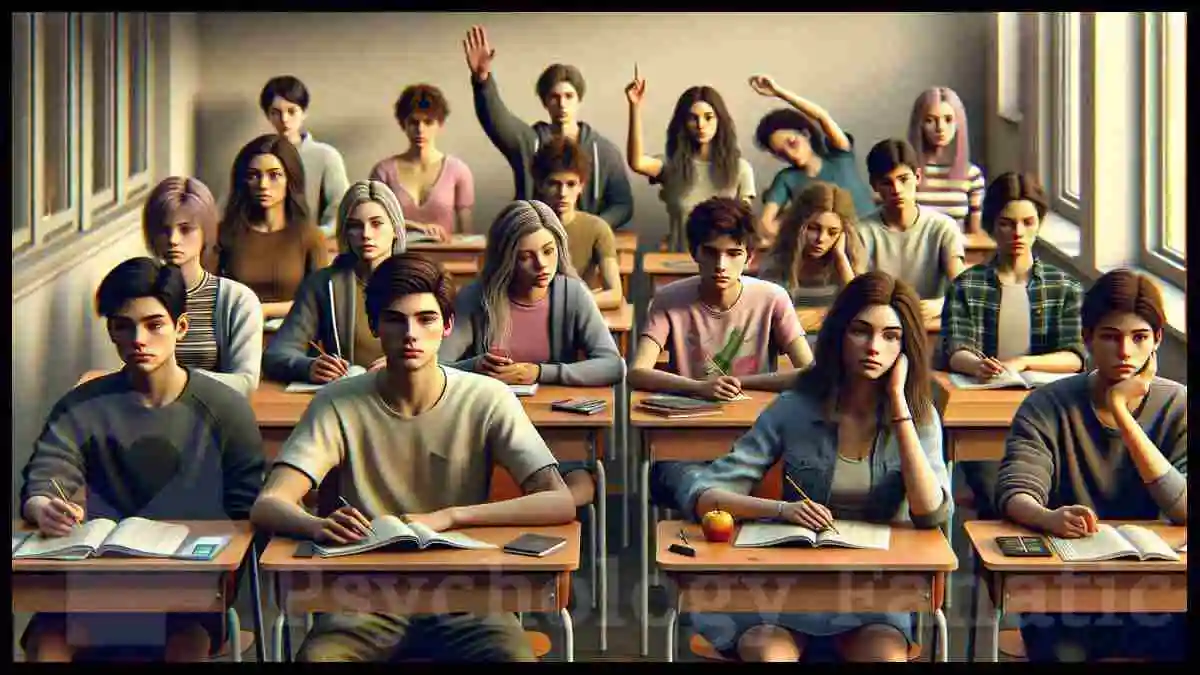
Shaping Minds, Shaping Behavior: The Psychology of Attitudes
Attitude is a crucial element that shapes our thoughts, emotions, and behavior. In the realm of psychology, attitude refers to a set of emotions, beliefs, and behaviors towards a particular object, person, thing, or event. This multifaceted concept plays a significant role in influencing how individuals perceive and interact with the world around them.
Notably, we don’t have a single attitude. Rather, we have a pattern of reactions that we express towards different objects, persons, things, and events. These attitudes are not completely independent of each other. Personality and emotional patterns strongly influence our attitudes.
Key Definition:
An attitude is a general way of thinking, feeling, and behaving that reflects one’s personality, beliefs, and values. A style of attitude can influence how a person interacts with others, responds to challenges, and copes with emotions.
Components of Attitude
Attitudes typically comprise three fundamental components:
- Cognitive Component: This facet encapsulates an individual’s beliefs and knowledge about the object of their attitude. It reflects the rational aspects that involves the individual’s perceptions and thoughts associated with the object.
- Affective Component: The affective component involves the emotional aspect of attitude, encompassing the individual’s feelings and emotions linked to the object. These emotions can be positive, negative, or neutral, and significantly influence the individual’s overall attitude.
- Behavioral Component: This aspect involves the individual’s behavioral tendencies or actions towards the object of their attitude. It reflects how one intends to behave or actually behaves in relation to the object.
Often these elements work together in the unconscious motivating action in reaction to stimuli. The concept is similar to Carl Jung’s shadow. John Birtchnell explains that the shadow is the “unexpressed part of ourselves.” It is an “unconscious aspect of the personality”, characterised by traits and attitudes that the “conscious ego does not recognise in itself” (Birtchnell, 2004, p. 54).
Development of Attitudes
An attitude begins with biological structures that shape personality. The young child, with their unique personality, interacts with the environment in a reciprocal fashion that form the child’s pattern of reactions towards varying experiences.
Rhwan Joseph, Ph.D., a neuropsychologist known for his work in clinical neuropsychology, argues that we may hold different attitudes towards the same object.
Joseph explains:
“Because language, emotions, memories, and perceptions are lateralized, the two halves of the brain, as we’ve seen, may reach different and conflicting conclusions about what seems to be the same piece of information. The two halves not only may perceive things differently but may have different attitudes regarding what they witness, hear, and observe. Indeed, this can be a major source of intrapsychic conflict, as not only different attitudes but different memories may be triggered” (Joseph, 2001).
The duality of reaction is subject to focusing illusions. Basically, depending on the process most salient at the time, our attitude may change in regards to that specific object. for example, if I am confronted with a stimuli while sitting in the church pews, I likely will have a much different reaction than if I am in contact with that same stimuli while drinking at the bar with my friends.
See Focusing Illusion for more on this topic
Attitudes can be shaped through various means, including personal experiences, socialization, and exposure to media and influential figures. Early childhood experiences, cultural background, and social environment play pivotal roles in the formation of attitudes. Additionally, factors such as persuasion, cognitive dissonance, and social cognition contribute to the development and modification of attitudes over time.
Primary Factors
Primary factors involved in forming attitudes are:
Personality
Personality plays a significant role in shaping an individual’s attitudes. The Big Five personality traits, which include openness, conscientiousness, extraversion, agreeableness, and neuroticism, are often associated with specific attitudes. For example, individuals high in openness may exhibit more positive reaction toward change and diversity, while those high in conscientiousness may have a more positive attitude toward structure and organization. Additionally, personality can influence how individuals perceive and respond to different situations, further impacting their attitudes and behaviors.
See Individual Differences for more on this topic
Parenting Styles
Parenting styles are the different ways that parents raise and discipline their children. Research has identified four main parenting styles: authoritative, authoritarian, permissive, and uninvolved (Cherry, 2022). Each of these styles has different effects on children’s behavior, self-esteem, academic performance, and social skills. Generally, authoritative parenting, which is characterized by high levels of warmth, responsiveness, and reasonable expectations, is associated with the most positive outcomes for children.
Peer Relationships
Peer relationships are the social connections that children form with other children of their age group. These relationships can provide children with opportunities to learn, play, cooperate, and develop social skills. Peer relationships can also influence children’s attitudes, values, and behaviors through processes such as peer pressure, modeling, and feedback. Peer relationships can have positive or negative effects on children’s style of attitude, depending on the quality and nature of the interactions.
Media Exposure
Media exposure is the amount and type of media content that children consume through various platforms, such as television, internet, video games, and social media. Markedly, media exposure can affect children’s style of attitude by exposing them to different messages, images, and role models that can shape their perceptions, preferences, and expectations. Media exposure can have positive or negative effects on children’s style of attitude, depending on the content, context, and frequency of the exposure (Arias, 2019).
Functions of Attitude
Attitudes serve several important functions for individuals, including:
- Utilitarian Function: Attitudes help individuals maximize rewards and minimize punishment by guiding them towards beneficial objects or events.
- Ego-Defensive Function: Attitudes can serve the purpose of protecting individuals from external threats by helping them cope with anxieties and stress.
- Knowledge Function: Attitudes help structure and organize one’s understanding of the world by providing a framework for interpreting information and experiences.
- Expressive Function: Attitudes can be a means for individuals to express their self-concept and values, enabling them to communicate their identity to others.
Our attitude is composed by a large web of different processing systems that ultimately creates our reaction to a particular stimuli.
Muriel James, Ed.D. (1917-2017) and Dorothy Jongeward, Ph.D. (1926-2020), prominent psychologists and pioneers in the Human Potential Movement, wrote that the environment “does not make man, but that everything depends on what man makes of it, on his attitude toward it” (James & Jongeward, 1996).
Impact on Growth
Our attitudes significantly are related to our behaviors. Our attitude towards something directly relates to our behavioral reactions. A few notable examples are attitudes toward:
- professional development
- emotional discomfort
- social interaction
- laws and rules
- education
- mistakes
These attitudes determine how we respond. Do we run from discomfort, losing opportunities? Do we isolate from social interactions? Or do we quit school to chase dreams? Our underlying motivations play a critical role in shaping our lives by the behaviors they motivate.
Life is complex. Many situations require a quick response. We just don’t have the resources to openly evaluate the facts and intricate details of every situation so we rely on hidden and immediate reactions to guide action.
Alison Ledgerwood and Yaacov Trope explain:
“Attitudes help guide action and interaction by providing efficient, valenced summaries of a large amount of evaluative information that would be difficult to process piece by piece before each behavior we undertake in daily life” (Ledgerwood & Trope, 2016)
Basically, when we face a problem, we draw upon mental schemata, organized bundles of stored knowledge (LeDoux, 2003). Our attitudes speed decision making by drawing upon the complex learning associated from past exposures.
Understanding our complex nature that influences reactions towards specific stimuli is essential in various fields, including social psychology, consumer behavior, and organizational psychology. The study of attitudes plays a pivotal role in comprehending human behavior, decision-making processes, and societal dynamics, making it a core area of interest within the realm of psychological research.
Associated Concepts
- Authenticity (Aligning with Our True Self): This refers to the genuine expression of one’s thoughts, feelings, and behaviors in alignment with one’s true self. It involves the ability to act in a way that is consistent with one’s own values, beliefs, and experiences, rather than conforming to external expectations or pressures.
- Self-Schema: This refers to a cognitive structure or framework that captures and organizes information about ourselves. It represents our beliefs, opinions, attitudes, and values about various aspects of our identity, including our personality traits, abilities, physical appearance, and social roles.
- Negative Attribution Style: This refers to the tendency of individuals to attribute negative events or outcomes to internal, stable, and global factors.
- Triandis’s Attitude-Behavior Theory: This theory posits that behavior is determined by a combination of habit, behavioral intention, and facilitating conditions. Behavioral intention, the central predictor of behavior, is influenced by social factors (norms, roles, self-concept), affect (emotions and feelings), perceived consequences, and habit.
- Explanatory Style: This refers to an individual’s habitual way of explaining and interpreting events or situations in their life.
- Congruence: In the context of Carl Rogers; humanistic psychology, congruence refers to the alignment between an individual’s self-concept and their experiences. When there is congruence, a person is more likely to behave authentically.
- Self-Perception Theory: This theory suggests that people develop their attitudes and feelings by observing their own behavior and concluding what attitudes must have caused it, especially when internal cues are weak or ambiguous.
A Few Words by Psychology Fanatic
In conclusion, attitudes represent an integral aspect of human cognition and behavior, influencing how individuals perceive, feel, and act towards the world around them. By delving into the intricate layers of motivation, psychologists can gain valuable insights into the intricate workings of the human mind and behavior.
Understanding the complexity of attitudes enriches our comprehension of human cognition and behavior, shedding light on the intricate workings of the human mind and behavior.
Last Update: March 5, 2025
References:
Arias, Eric (2019). How Does Media Influence Social Norms? Experimental Evidence on the Role of Common Knowledge. Political Science Research and Methods, 7(3), 561–578. DOI: 10.1017/psrm.2018.1
(Return to Main Text)
Birtchnell, John (2004). The Two of Me: The Rational Outer Me and the Emotional Inner Me. Psychology Press; 1st edition. ISBN: 9781138877474; DOI: 10.4324/9780203501979
(Return to Main Text)
Cherry, Kendra (2022). Why Parenting Styles Matter When Raising Children.Verywellmind. Published: 12-1-2022; Accessed: 3-5-2024. Website: https://www.verywellmind.com/parenting-styles-2795072
(Return to Main Text)
James, Muriel; Jongeward, Dorothy (1996). Born To Win: Transactional Analysis With Gestalt Experiments. Da Capo Lifelong Books; 25th Anniversary ed. edition. ISBN-10: 0201590441
(Return to Main Text)
Joseph, Rhawn (2001). The Right Brain and the Unconscious: Discovering The Stranger Within. Basic Books. ISBN-10: 1489959963; DOI: 10.1007/978-1-4899-5996-6
(Return to Main Text)
Ledgerwood, Alison; Trope, Yaacov (2016). Local and Global Evaluations Attitudes as Self-Regulatory Guides for Near and Distant Responding. In: Kathleen D. Vohs and Roy F. Baumeister (eds), Handbook of Self-Regulation: Third Edition: Research, Theory, and Applications. The Guilford Press; 3rd edition. ISBN-10: 1462533825; APA Record: https://psycnet.apa.org/record/2010-24692-000
(Return to Main Text)
LeDoux, Joseph (2003). Synaptic Self: How Our Brains Become Who We Are. Penguin Books. ISBN-10: 0142001783
(Return to Main Text)
Related Articles

Triandis’s Attitude-Behavior Theory

Understanding Protective Motivation Theory in Psychology

Theory of Reasoned Action
