
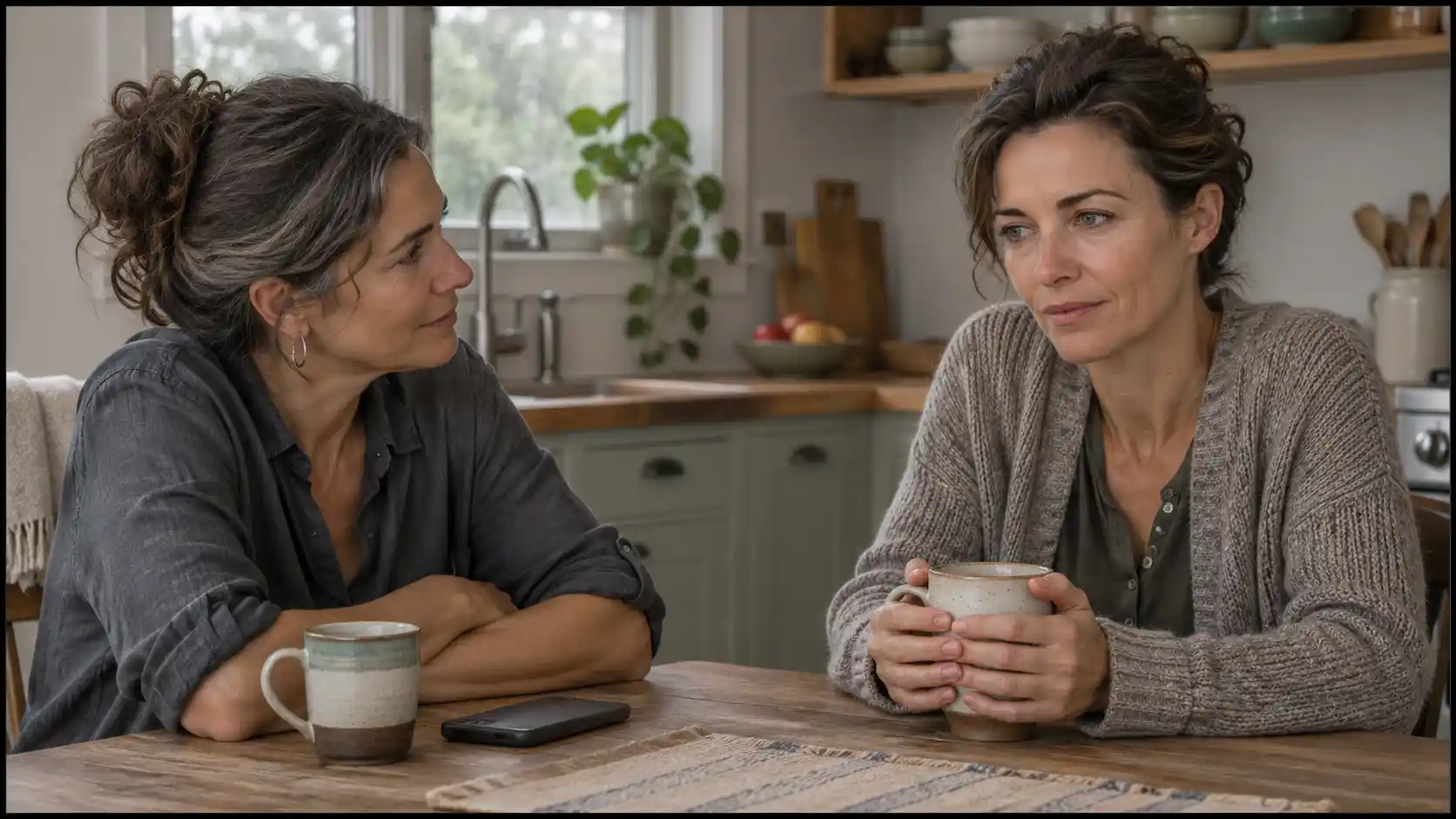
You hear that your former spouse has died. Later, when a friend asks how your day went, you almost tell them. You remember the kitchen you shared and the familiar sound of the key in the door. You remember why you left, too. You hesitate because you can already imagine your friend asking why the news would upset you after all these years.
The term can apply to losses other than death. Here, we’ll look at what happens after two deaths that can leave people uncertain about where to turn: the death of a former spouse and the death of a pet. In both cases, the person who’s grieving may have to decide whether to tell anyone before they know how much room there will be to talk (Doka, 2016).
Key Definition:
Disenfranchised grief is grief that receives little recognition or support because it falls outside others’ expectations. People may dismiss the loss, overlook what a relationship meant, or question who is entitled to grieve and how (Doka, 2002b).
Table of Contents
Who Gets Recognized as a Mourner?
Who gets time off after a death? Whom does the family invite to speak at the memorial? Kenneth Doka used the term grieving rules for the written and unwritten expectations behind questions like these. They help determine whose grief people take seriously and what they expect it to look like. A person can learn where others think they fit from something as ordinary as a workplace leave policy (Doka, 2002b).
Grieving rules can also shape what people notice. The circumstances of a death may make others reluctant to discuss it. If they expect grief to show up as tears, they may assume a person who keeps busy is doing fine. That person’s grief may be hard for others to see even when the relationship and the loss are widely known (Doka, 2002b; Neimeyer & Jordan, 2002).
Charles Corr points to a distinction we can hear in everyday conversation. A friend who hasn’t heard about the death has had no chance to respond. A friend who knows about it and says you should be over it is judging how you grieve. The same loss may draw sympathy from one group of friends and dismissal from another (Corr, 2002; Doka, 2016).
Two Losses That Can Go Unrecognized
When a Former Spouse Dies
A marriage can end while the years spent together still matter. Former spouses may share children or remember a period of life that few other people knew firsthand. A person may have felt relieved when the marriage ended and still feel sadness at the death. Doka’s discussion of earlier research describes a range of responses, including little distress and grief that came as a surprise. How someone responds can depend on the relationship and what happened in the years after the divorce (Doka, 2002a).
After her former husband died, communication researcher Jillian Tullis wondered what response would be appropriate. She decided against attending a service, partly out of concern that her presence might draw attention away from his family. Some people close to her acknowledged her loss. Her account shows how differently the same grief can be received across relationships (Tullis, 2017).
When a Pet Dies
A pet’s place in a household is often clearest in the ordinary things its people do together. After a dog dies, someone may still reach for the leash at the usual time or listen for the sound of paws when they come home. A friend who knew the dog only from the occasional visit may have little sense of how much of the day has changed. Doka describes this in the case of a woman whose dog gave her companionship, a reason to walk, and a link to her late husband (Doka, 2016).
Barbara Meyers describes how dismissive comments can overlook what the animal meant to the person (Meyers, 2002).
In a review of pet-loss research, Ben Hughes and Beth Lewis Harkin found reports of people encountering limited understanding and difficulty finding support (Hughes & Lewis Harkin, 2025).
What Becomes Harder When Grief Goes Unrecognized
How others understand the bond can shape whom a mourner trusts with the news and where they feel welcome remembering the person or animal who died.
Speaking About the Loss and Finding a Place to Mourn
Telling another person about a death can be a way to share news, ask for help, or hear a memory you didn’t know. Those possibilities narrow when you expect to spend the conversation explaining why the loss matters. A mourner might keep the news to a few trusted people or choose to remember in private. Privacy can be welcome. It feels different when keeping quiet seems like the only way to avoid having the relationship judged (Doka, 2002b; Doka, 2016).
Someone may learn about a service too late to attend or have little say in how the person is remembered. Even when the family is glad to see a former spouse at a memorial, they may think of them as someone who has come to support the children. They can welcome the former spouse and still overlook that this person has a loss of their own. Doka describes funeral situations in which people were expected to support the family while their own need to mourn went unrecognized (Doka, 2002c).
Questioning Your Own Grief
Someone whose pet dies may catch themselves thinking, “I shouldn’t be this upset.” A former spouse may feel embarrassed when sadness catches them by surprise. Jeffrey Kauffman calls it self-disenfranchisement when people discount or deny their own grief. Doka describes cases in which shame or fear of being judged makes grief hard to acknowledge, even in private (Kauffman, 2002; Doka, 2016).
What Acknowledgment Can Change
Giving Someone Room to Talk
When you’re already wondering whether your grief makes sense, it can be hard to decide how much to say. Suppose you tell the friend from the opening that your former spouse has died. They pause and say, “You shared a lot of years. How has it been to hear the news?” You can tell them there’s a lot you’re still sorting out. You can also let the conversation rest there. After a pet dies, a friend might ask what you miss about the animal and give you the same choice about how much to share.
In a survey by Samar Aoun and colleagues, people who had lost someone described listening, companionship, and dependable support as helpful. Their responses tell us what people valued and leave open whether acknowledgment changes the intensity or duration of grief (Aoun et al., 2018).
People may find that the support available to them changes over time. In the first week, friends may ask about the loss. Later, as those questions become less frequent, a check-in can give the mourner another chance to talk if they want to (Neimeyer & Jordan, 2002).
Making Room for Remembrance
At the memorial, someone who knows the former spouse might ask whether they’d like to share a memory. They could talk privately if that feels more fitting. After the death of a pet, a friend who knew the animal might offer to walk the familiar route with you. Doka describes how a remembrance outside the main funeral can make room for people whose loss went unacknowledged at the service (Doka, 2002c; Doka, 2016).
Some bereaved pet owners in the research valued ways of remembering their animals. People’s preferences varied. Someone may appreciate an invitation and still prefer to decline, or decide to mark the loss alone. The offer gives the mourner a say in how the loss is recognized (Doka, 2002c; Hughes & Lewis Harkin, 2025).
A Few Words by Psychology Fanatic
Perhaps you tell your friend how the two of you used to leave the kitchen window open on the first warm day of spring. It’s an ordinary memory, and until this moment there hasn’t been a place for it in the conversation.
The friend may never know all that the marriage held or why that detail came back today. Their acknowledgment gives you room to tell the story in your own way. You get to decide what else to share.
Associated Concepts
- Tonkin’s Model of Grief: A model in which life can grow around grief while the loss continues to matter.
- Emotional Validation: Acknowledging someone’s emotional experience as understandable in context.
- Emotional Attunement: Noticing another person’s emotional cues and responding with sensitivity.
- Empathy in Relationships: Trying to understand a loved one’s experience from their perspective.
- Belongingness: The sense that we are accepted and have a place among others.
- Social Isolation: Limited contact with others or limited opportunities for social connection.
References
Samar M. Aoun; Lauren J. Breen; Ishta White; Bruce Rumbold; Allan Kellehear (2018). What sources of bereavement support are perceived helpful by bereaved people and why? Empirical evidence for the compassionate communities approach. Palliative Medicine, 32(8), 1378–1388. DOI: 10.1177/0269216318774995.
(Return to Main Text)
Charles A. Corr (2002). Revisiting the concept of disenfranchised grief. In Kenneth J. Doka (Ed.), Disenfranchised Grief: New Directions, Challenges, and Strategies for Practice (pp. 39–60). Research Press. ISBN: 9780878224272.
(Return to Main Text)
Kenneth J. Doka (2002a). A later loss: The grief of ex-spouses. In Kenneth J. Doka (Ed.), Disenfranchised Grief: New Directions, Challenges, and Strategies for Practice (pp. 155–166). Research Press. ISBN: 9780878224272.
(Return to Main Text)
Kenneth J. Doka (2002b). Introduction. In Kenneth J. Doka (Ed.), Disenfranchised Grief: New Directions, Challenges, and Strategies for Practice (pp. 5–22). Research Press. ISBN: 9780878224272.
(Return to Main Text)
Kenneth J. Doka (2002c). The role of ritual in the treatment of disenfranchised grief. In Kenneth J. Doka (Ed.), Disenfranchised Grief: New Directions, Challenges, and Strategies for Practice (pp. 135–147). Research Press. ISBN: 9780878224272.
(Return to Main Text)
Kenneth J. Doka (2016). Grief Is a Journey: Finding Your Path Through Loss. Atria Books. ISBN: 9781476771489.
(Return to Main Text)
Ben Hughes; Beth Lewis Harkin (2025). The impact of continuing bonds between pet owners and their pets following the death of their pet: A systematic narrative synthesis. OMEGA — Journal of Death and Dying, 90(4), 1666–1684. DOI: 10.1177/00302228221125955.
(Return to Main Text)
Jeffrey Kauffman (2002). The psychology of disenfranchised grief: Liberation, shame, and self-disenfranchisement. In Kenneth J. Doka (Ed.), Disenfranchised Grief: New Directions, Challenges, and Strategies for Practice (pp. 61–77). Research Press. ISBN: 9780878224272.
(Return to Main Text)
Barbara Meyers (2002). Disenfranchised grief and the loss of an animal companion. In Kenneth J. Doka (Ed.), Disenfranchised Grief: New Directions, Challenges, and Strategies for Practice (pp. 251–264). Research Press. ISBN: 9780878224272.
(Return to Main Text)
Robert A. Neimeyer; John R. Jordan (2002). Disenfranchisement as empathic failure: Grief therapy and the co-construction of meaning. In Kenneth J. Doka (Ed.), Disenfranchised Grief: New Directions, Challenges, and Strategies for Practice (pp. 95–117). Research Press. ISBN: 9780878224272.
(Return to Main Text)
Jillian A. Tullis (2017). Death of an ex-spouse: Lessons in family communication about disenfranchised grief. Behavioral Sciences, 7(2), Article 16. DOI: 10.3390/bs7020016.
(Return to Main Text)
Updated: November 26, 2026