
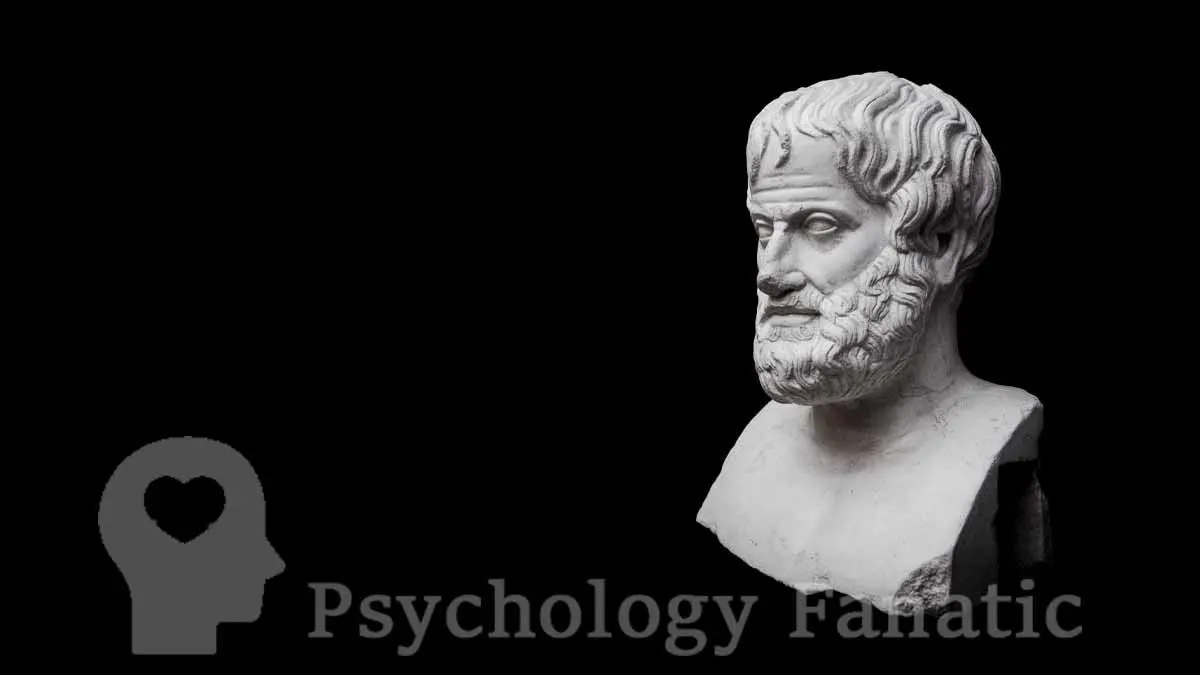
The Pursuit of Eudaimonia: Thriving in Life
We want to be happy. We chase things that delight our being. The pursuit of happiness is a given; how we pursue happiness, well, that is a complex subject, hotly debated throughout history. We hold our right to pursue happiness as sacred, perhaps, even as an obligation. If we have any chance of arriving at a destination, we must have an idea of where that destination is, and which routes will take us there. If we want to be happy, we must know our definition of happiness, and how to achieve that ideal. Aristotle’s eudaimonia provides a glimpse into a happiness that is akin to thriving or flourishing, rather than the more popular definitions associated with present moment pleasures (hedonia).
At Psychology Fanatics, we have spent a great deal of time and resources researching happiness. Much of our research is concentrated on the behaviors that improve our lives. Our definition of happiness aligns well with Aristotle’s concept of eudaimonia than many traditional definitions.
What is Happiness?
The English word ‘happy’ comes from the Norse word ‘happ’, which means fortune or luck. We see the Norse influence on other English words such as: perhaps, happenstance, and hapless (Philosophy Terms, 2018).
Originally, happiness implied ‘fortunate.’ Time and culture slowly bend meanings and definitions change. Happiness is no different. Mostly, we use the term happiness to describe an emotional state. “I am happy to see you.” I struggle to believe that the founding fathers had this definition of happiness in mind when in 1776 they wrote that “all men” had the “unalienable rights” of “life, liberty and the pursuit of happiness.” (Declaration of Independence).
Hedonia vs. Eudaimonia
Eudaimonia
Eudaimonia is a combination of the prefix eu (which means good, or well), and daimon (which means spirit) (Moore, 2021). Together eu and daimon often is translated to mean “human striving or the best good” (Tedeschi et al., 2018). Eudaimonia is “an activity of soul in conformity with excellence or virtue” (Haidt, 2003). Eudaimonia views life through a wide-angled lens, striving for purpose and deeper fulfillment, even when those strivings travel through momentary discomforts. Lastly, eudaimonia is effort directed towards full development of our potential.
Todd B. Kashdan and Robert Biswas-Diener provided several examples of eudaimonia in their wonderful book The Upside of Your Down Side. “Eudaimonic activity is volunteering time to help somebody else, persevering at a valued goal in the face of obstacles, expressing gratitude to somebody who has been helpful, and striving for excellence in the development and use of one’s talents” (Kashdan & Biswas-Diener, 2015).
For Aristotle, eudaimonia was the state of flourishing, or living well. A state that requires living a life in accordance with virtue. Psychology literature often refer to similar terms that share Aristotle’s definition of eudaimonia. Some of the terms are meaning, joy, self-actualization, fully developed person, or fully integrated adult.
Hedonia
Hedonia is the more immediate feeling affects experienced from satisfying a need of something we perceive as important. Kashdan and Biswas-Diener explain, “Hedonia is that sense of well-being you get on seeing the first finished copy of your new book, crossing the finish line after running a marathon, after a bout of great sex, on hearing you’re getting a good pay raise at work, and while enjoying a party where everybody feels comfortable enough to sing, dance, and be silly” (Kashdan & Biswas-Diener, 2015).
Hedonia is associated with present moment thinking. “Hedonia is about having a pleasing life, period” (Bauer et al., 2014, p. 187). In psychological research hedonia wellbeing is often defined as a combination of pleasurable experiences and subjective satisfaction in life (p. 187).
A recent tweet from a person I follow wrote, “My goal in life is to be happy all the time.” This popular mindset holds hedonia experiences as the primary purpose, motivating action. At Psychology Fanatic, we hold a somewhat different view.
See Happy All the Time for more on this topic
Hedonia and Eudaimonia are Not Opposites
Hedonia and eudaimonia are not opposites, placed on different ends of a continuum. Perhaps, and as I believe, wellness is comprised of healthy doses of both.
Tal Ben-Shahar, a Harvard professor, also holds this opinion. He defines happiness as, “The overall experience of pleasure and meaning.” He continues, “A happy person enjoys positive emotions while perceiving her life as purposeful. The definition does not pertain to a single moment but to generalized aggregates of one’s experiences: a person can endure emotional pain at times and still be happy” (Ben-Shahar, 2007, p. 33).
“Creating and cultivating oneself—giving style to one’s character—does not mean simply acting on every instinct and drive one might have.”
Eudaimonia and Hedonia as Motivation
Both eudaimonia and hedonia motivate action. Hedonia is captured in Freud’s “pleasure principle” while eudaimonia leans more on a growth mindset. Hedonia satisfies basic needs at the base of Maslow’s hierarchy of needs while eudaimonia more accurately portrays the pinnacle of self-actualization. Bauer et al. suggest that hedonia is safety seeking, relying on immediate comfort and security while eudaimonia motivations pursue growth (Bauer et al., 2015, p. 186). Both safety and growth are necessary for navigating life. The young child explores his world, drifting from his mother’s arms to experience novelty, but, routinely, runs back for reassurance.
Kashdan and Biswas-Diener point out that both pleasure and meaning are necessary, working together. “The point here is that pleasure and meaning work like a seesaw, and it’s important to have both in your life at different times (and occasionally even at the same time.)” (Kashdan & Biswas-Diener, 2015). Some pleasures we forego, enduring discomfort for a greater good, enhancing our futures or to benefit others and their futures. However, we also need some pleasure. Without pleasure, life loses much of its flavor.
Ben-Shahar explains, “While the happy person experiences highs and lows, his overall state of being is positive. Most of the time he is propelled by positive emotions such as joy and affection rather than negative ones such as anger and guilt. Pleasure is the rule; pain, the exception. To be happy, we have to feel that on a whole, whatever sorrows, trials, and tribulations we may encounter, we still experience the joy of being alive” (Ben-Shahar, 2007, p. 36).
See Self-Actualization for more on this topic
Associated Concepts:
- PERMA Model: This model, developed by psychologist Martin Seligman, is a well-being theory that identifies five essential elements for a flourishing and fulfilling life: positive emotions, engagement, relationships, meaning, and accomplishment.
- Self-Actualization: Abraham Maslow’s concept of self-actualization, which refers to the realization of one’s potential and the pursuit of personal growth, aligns well with the concept of eudaimonia.
- A Meaningful Life: This typically refers to living in a way that aligns with one’s values, beliefs, and passions. It often involves engaging in activities and relationships that bring a sense of fulfillment, purpose, and satisfaction.
- Sustainable Happiness: This concept refers to a long-lasting sense of well-being and contentment that is not dependent on external circumstances. It encompasses a deep fulfillment that comes from meaningful relationships, personal growth, contributing to the community, and living in harmony with the environment.
- Whole Person Wellness: This refers to a holistic approach to well-being that encompasses all aspects of an individual’s life. This includes physical, mental, emotional, and spiritual health, as well as factors such as social relationships, environmental well-being, and overall lifestyle.
A Few Words by Psychology Fanatic
Like most of life, there is no perfect algorithm for wellness. We are challenged to balance our pursuits, identify feelings, and constantly adjust as our dynamic life sails through the storms and joys on unknown seas. Often, we find pursuits that provide both hedonia feeling affects and eudaimonia meaning. We must recognize and cherish these activities, leaning on them to build a foundation of wellness.
Other times, we must engage in activities that challenge our senses, teetering on the edge of frustration and sorrow, knowing the work must be done for a greater cause. And still, other times, we can tease our senses with pleasure, escaping the weight of the moment through amusements that distract. A healthy balancing that is constantly checked and adjusted, leads to our goal of living well, living good, and living happy.
Last Update: January 13, 2026
Resources:
Bauer, J., Park, S., Montoya, R., & Wayment, H. (2014). Growth Motivation Toward Two Paths of Eudaimonic Self-Development. Journal of Happiness Studies, 16(1), 185-210. DOI: 10.1007/s10902-014-9504-9
(Return to Main Text)
Ben-Shahar, Tal (2007). Happier: Learn the Secrets to Daily Joy and Lasting Fulfillment. McGraw Hill; First Edition. ISBN-10: 0071492399
(Return to Main Text)
Haidt, Jonathan (2003). The Happiness Hypothesis: Finding Modern Truth in Ancient Wisdom. Basic Books; 1st edition. ISBN-10: 0465028020; APA Record: 2006-00770-000
(Return to Main Text)
Kashdan, Todd; Biswas-Diener, Robert (2015) The Upside of Your Dark Side: Why Being Your Whole Self–Not Just Your “Good” Self–Drives Success and Fulfillment. Plume; Reprint edition. ISBN-10: 0147516447
(Return to Main Text)
Moore, C. (2021) What is Eudaimonia? Aristotle and Eudaimonic Well-Being. Positive-Psychology. Published: 5-3-2021; Accessed: 5-9-2021. Website: https://positivepsychology.com/eudaimonia/
(Return to Main Text)
Philosophy Terms (2018). Eudaimonia. Published: 10-25-2018; Accessed: 5-10-2021. Website: https://philosophyterms.com/eudaimonia/
(Return to Main Text)
Tedeschi, Richard G.; Shakespeare-Finch, Jane; Taku, Kanako; Calhoun, Lawrence G. (2018). Posttraumatic Growth: Theory, Research, and Applications. Routledge; 1st edition. ISBN: 9781032913247; DOI: 10.4324/9781315527451
(Return to Main Text)